Search engine optimization (SEO) is not a one-time project, but an ongoing process. In a digital world where millions of blog posts and websites are published daily, simply being online is no longer enough.
If you aren’t on page 1 of Google, you practically don’t exist for the vast majority of users.
In this guide, you will learn everything you need to know to sustainably bring your website to the top of the search results.
Why SEO is the Most Important Marketing Channel
Before we dive into the technical aspects, we need to understand why SEO remains indispensable despite social media and paid ads (SEA). SEO offers the highest return on investment (ROI) because the traffic is “organic.” This means you do not pay per click.
While paid advertisements stop instantly once the budget is depleted, a well-optimized page delivers visitors for years to come. Furthermore, Google has refined its algorithms to the point where user experience is the primary focus today. Therefore, optimizing SEO nowadays primarily means delivering the best possible answer to the user’s question.
Boost Traffic Now – Contact – +34 625862714 – marckugge (@) gmail.com
The Foundations of Keyword Research
Everything begins with the right keyword. Without well-founded research, you are writing past your market.
Search Intent
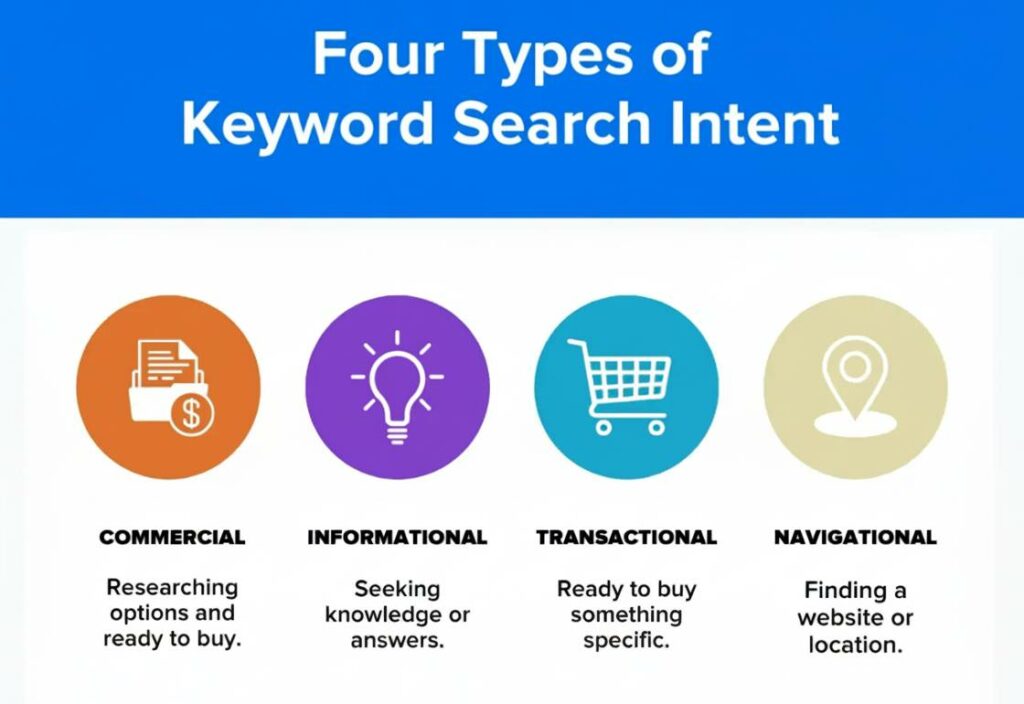
Today, Google strictly differentiates according to the intent behind a search:
- Informational: The user is looking for knowledge (e.g., “What is SEO?”)
- Transactional: The user wants to buy (e.g., “Buy SEO tool subscription”)
- Navigational: The user wants to go to a specific page (e.g., “Google Search Console login”)
Your goal: Find keywords with high search volume, but make sure the competition is not too strong. Use tools like Google Keyword Planner, Ahrefs, or Semrush to find niche (long-tail) keywords. Long-tail keywords consist of multiple words and often convert better because they are more specific.
On-Page Optimization
On-page optimization encompasses all measures that you can perform directly on your website.
Title Tags and Meta Descriptions: Your Website’s Storefront
The title tag is the first thing a user sees on Google. It should contain the primary keyword and encourage people to click. The meta description is your “advertising copy” in the SERPs (Search Engine Result Pages). Although it has no direct ranking influence, it massively impacts the click-through rate (CTR).
The Perfect H-Structure (Headings)
A clear hierarchy is essential for Google. There must be only one H1 per page. This is followed by logically nested H2, H3, and H4 headings. This helps the crawler weigh the relevance of each individual section.
Content Quality and E-E-A-T
Google evaluates content based on Experience, Expertise, Authoritativeness, and Trustworthiness.
- Expertise: Show that you know what you are talking about.
- Authoritativeness: Link to high-quality sources and get others to link to you.
- Trust: An imprint, SSL encryption, and clear contact options are mandatory.
Boost Traffic Now – Contact – +34 625862714 – marckugge (@) gmail.com
Technical SEO: Backbone of Your Website
Even the best content is useless if the technology fails. Google ruthlessly penalizes slow or faulty pages.
Core Web Vitals und Page Speed
Loading time is an official ranking factor. Users bounce if a page takes longer than three seconds to load. Optimize images (WebP format), use caching, and ensure a lean design.
Mobile First Indexing
Google primarily indexes the mobile version of your website. If your site is difficult to use on a smartphone, your rankings will drop in desktop search as well. A responsive design is the standard today.
Indexierung und Sitemap
Make sure that Google can find your pages in the first place. A sitemap.xml and a clean robots.txt file give the crawler the necessary instructions. Regularly check the Google Search Console for indexing errors.

Off-Page SEO
Backlinks are like real-life recommendations. When a reputable site links to you, Google views it as a vote of confidence.
Quality over quantity
In the past, the sheer number of links was what mattered. Today, a single link from a strong, topically relevant site (e.g., a major daily newspaper or a trade magazine) is worth more than 100 links from dubious web directories. Avoid buying links, as this can lead to penalties.
Content marketing as a link magnet
The best strategy for backlinks is “linkable content.” Create infographics, studies, or detailed whitepapers that are so good that other bloggers and journalists link to them voluntarily.
Internal Linking
While backlinks come from external sources, you have 100% control over your internal linking. It helps Google understand the structure of your site and distributes “link juice” (authority) to weaker subpages. Use descriptive anchor texts (not “click here,” but rather “SEO optimization tips”) and link topically related articles to each other.
Boost Traffic Now – Contact – +34 625862714 – marckugge (@) gmail.com
Local SEO: Attracting Customers in Your Area
If you run a local business, Local SEO is your most important tool.
- Google Business Profile: Completely optimize your listing (opening hours, photos, categories).
- Reviews: Active review management boosts trust with both users and Google.
- NAP Consistency: Ensure that your Name, Address, and Phone number (NAP) are spelled identically across the entire web.
Performance Tracking: Measure, Analyze, Optimize
SEO is not a “set and forget” strategy. You need to know what works.
- Google Search Console: Monitor clicks, impressions, and your average position.
- Google Analytics 4 (GA4): Analyze user behavior. Where do people bounce? Which pages have the longest dwell time?
- Ranking Trackers: Tools like Seobility or Wincher show you daily how your keywords are developing.
The Most Common SEO Mistakes You Should Avoid
- Keyword Stuffing: Too many keywords in the text look unnatural and are penalized by Google.
- Duplicate Content: Never copy text from other sites or create two nearly identical pages for the same keyword.
- Missing Image Alt Text: Google cannot “see” images. Alt texts describe to the crawler what is shown in the picture.
- Lack of Patience: SEO takes time. It often takes 3 to 6 months before major changes show positive results.
Boost Traffic Now – Contact – +34 625862714 – marckugge (@) gmail.com
Conclusion: Step by Step to Your Top Ranking
Optimizing a website is a marathon. However, if you stick to the three pillars – content, technology, and authority – you will achieve long-term success. Start with a clean technical foundation, research keywords that truly matter to your target audience, and produce content that delivers genuine value.
Ultimately, SEO is nothing more than the art of balancing the needs of the user with the requirements of the search engine. When you make the user happy, you make Google happy too.

FAQ – Most Important Questions
To round off your SEO strategy, we have answered the most burning questions that we receive time and again here.
1. How Long Does It Take for SEO to Show Results?
SEO is a long-term investment. As a rule, it takes between 4 and 12 months for significant improvements in rankings to become visible. This depends on the strength of the competition, the age of your domain, and the quality of your optimization. While technical errors can be fixed quickly, building trust (authority) with Google takes time.
2. Can I Do SEO Myself Without Any Prior Knowledge?
Yes, the basics like content creation and simple on-page optimization (H-structure, meta tags) can easily be done yourself using tools and guides. For more complex topics, however, such as technical SEO (Core Web Vitals) or strategic backlink building, it is often advisable to bring in experts to avoid costly mistakes.
3. What is More Important: Content or Backlinks?
This is the classic “chicken-and-egg” question in SEO. The answer is: both are essential. Without high-quality content, nobody will want to link to you. However, without backlinks, Google will rarely classify your excellent content as authoritative enough for page 1. A healthy balance is crucial, though content should always form the foundation.
4. What are Google’s Most Important Ranking Factors?
Google uses over 200 signals. However, the most important ones today are:
- Content Relevance: Does the page actually answer the search query?
- User Experience (UX): Loading speed, mobile optimization, and ease of navigation.
- Authority: Backlinks from trustworthy sources.
- E-E-A-T: Experience, Expertise, Authoritativeness, and Trustworthiness.
5. How Often Should I Publish New Content?
Quality beats quantity. It is better to publish an in-depth “evergreen” article once a month than 200 words daily with no added value. However, consistency signals to Google that your site is being maintained. A rhythm of 1–2 high-quality posts per month is ideal for most SMEs.
Boost Traffic Now – Contact – +34 625862714 – marckugge (@) gmail.com
6. How Much Does Professional SEO Cost?
The costs vary greatly. Freelancers often charge between €80 and €150 per hour. Agency retainers for monthly ongoing support usually start at €1,000 to €3,000. It depends on whether they are only consulting or if content creation and link building are also included.
7. Will I Lose My Rankings If I Relaunch or Rebuild My Website?
During a relaunch, there is always a risk. However, if you correctly set up 301 redirects, largely maintain the URL structure, and migrate the meta data, a loss in rankings can be almost completely avoided. A relaunch is often even a great opportunity to modernize outdated technology.
8. What is the Difference Between SEO and SEA?
SEO (Search Engine Optimization) targets the unpaid, organic results. It takes longer but is more sustainable. SEA (Search Engine Advertising, e.g., Google Ads) involves paid advertisements. You appear at the top immediately, but you pay for every click. As soon as you stop the budget, you disappear from the ads.
9. Is Keyword Stuffing Still Dangerous Today?
Yes, absolutely. Google is smart enough today to understand semantic relationships. Over-repeating a keyword makes the text unreadable and can lead to a penalty from Google. Write primarily for the user, not for the crawler.
10. Do I Need a Special Plugin for SEO?
If you use WordPress, plugins like Yoast SEO or Rank Math are extremely helpful. They do not do the work for you, but they serve as an excellent checklist for meta tags, sitemaps, and the readability of your texts. They are a tool, not a complete solution.