
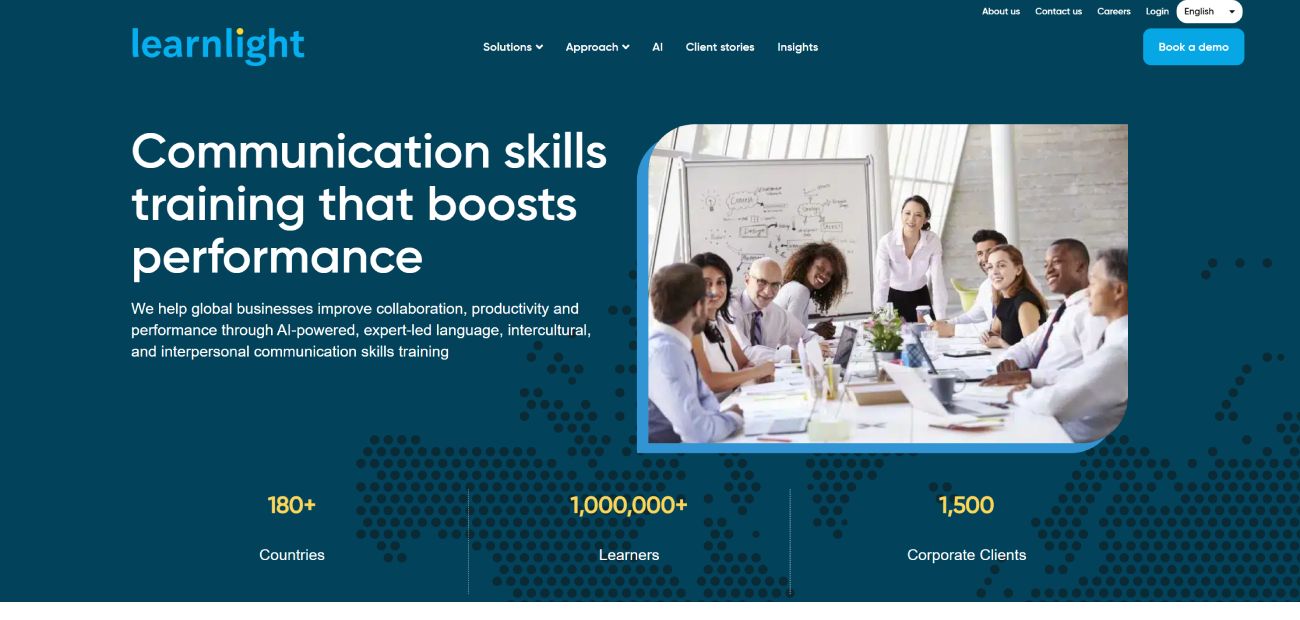
When Learnlight – a global leader in language training, intercultural skills, and communication coaching for enterprise teams – brought me in, the challenge was clear on paper but complex in practice: not enough Sales Qualified Leads (SQLs) were coming into HubSpot.
On the surface, that sounds like a paid media problem. Dig one layer deeper, and it was actually three problems stacked on top of each other: a fragmented (or missing) advertising ecosystem, a website that wasn’t built to convert, and a sales team that didn’t trust the leads they were getting. Solving it meant rebuilding the entire acquisition system – from the website’s technical foundation, through paid media across Google, Microsoft, and LinkedIn, up to how Sales and Marketing agreed on what a “good lead” even meant.
Here’s how I approached it.
The Problem: A Broken Funnel, Not a Broken Channel
When I started digging into Learnlight’s marketing engine, the root cause wasn’t a single failing channel – it was a structural gap. The company hadn’t built out a real advertising ecosystem. Google Ads, Meta Ads, and LinkedIn Ads existed in some form, but they weren’t working together, weren’t retargeting anyone, and weren’t supported by a website that could actually convert the traffic they sent.
That last part mattered more than it might seem. The existing website wasn’t built for paid acquisition. There was no real infrastructure for creating dedicated landing pages per campaign, per audience, or per offer – which meant every ad, regardless of intent or funnel stage, was pointing traffic at generic pages that weren’t designed to convert that specific visitor. You can’t scale paid media on top of a website that isn’t built to receive it.
So before touching a single ad account in a meaningful way, the first strategic move was restructuring the website itself, giving us the ability to spin up specific, purpose-built landing pages for every ad campaign going forward. This one decision unlocked almost everything that came after – better ad relevance scores, better conversion rates, and a real foundation for iterative testing.
Building the Ads Ecosystem: Google, Bing, and the Retargeting Layer Nobody Had Touched
With the website foundation in place, the next step was building out a proper paid acquisition ecosystem — primarily through Google Ads, complemented by Microsoft (Bing) Ads.
Bing is a channel a lot of competitors overlook, especially in the B2B/enterprise space. A meaningful share of enterprise decision-makers – the exact profile Learnlight needed to reach – still use Bing, particularly on corporate machines where it’s often the default search engine. Ignoring that channel means leaving a segment of high-intent, high-value searchers to competitors who also aren’t bothering to show up there. Adding Bing to the mix wasn’t about volume; it was about capturing intent competitors were leaving on the table.
Across both platforms, I implemented a full campaign structure:
- Keyword campaigns targeting high-intent search terms tied to Learnlight’s core offerings
- Performance campaigns to maximize reach and efficiency across Google’s automated bidding environment
- Retargeting campaigns across all channels – this was the single biggest gap in what existed before. Learnlight had never implemented a systematic retargeting layer, which meant every visitor who didn’t convert on their first visit was simply gone. Given that B2B enterprise buying cycles are long and rarely convert on a first touch, this was leaving a huge amount of value on the table.
Retargeting became the connective tissue across the entire ecosystem – recapturing website visitors, content readers, and partially-converted leads, and nurturing them back through the funnel instead of losing them after one session.
LinkedIn: A Different Beast, Built for a Different Buyer
Google and Bing capture demand. LinkedIn, especially for a B2B enterprise product like Learnlight’s, needed a different logic entirely – built around audience precision and always-on brand presence rather than pure keyword intent.
Rather than running a single always-changing campaign, I structured LinkedIn around four quarterly campaigns, one for each quarter of the year, designed to be reusable year over year. This gave the team a repeatable, scalable structure instead of rebuilding LinkedIn strategy from scratch every few months – while still allowing seasonal messaging and offer adjustments each quarter.
On top of that quarterly structure, I built an “always-on” campaign – a flexible unit that could function either as a top-of-funnel acquisition engine or as a retargeting layer, depending on how we needed to allocate spend at any given time. This gave the team the flexibility to shift budget and focus without having to build new campaign infrastructure every time priorities changed.

SEO: Turning the Blog Into a Trust Engine
Paid media brings people in the door. SEO and content are what build the credibility that gets enterprise buyers to trust you enough to book a demo – especially in a category like language training and intercultural skills, where the buyer (usually an L&D or HR director) needs to justify the investment internally.
Once the new website was live, I shifted significant focus to organic growth, using Surfer SEO heavily to research and shape a content strategy built for topical authority – not just keyword stuffing. This wasn’t a solo effort: it was a close collaboration with the Product Manager and Content Executives to make sure content strategy stayed aligned with product positioning and sales priorities.
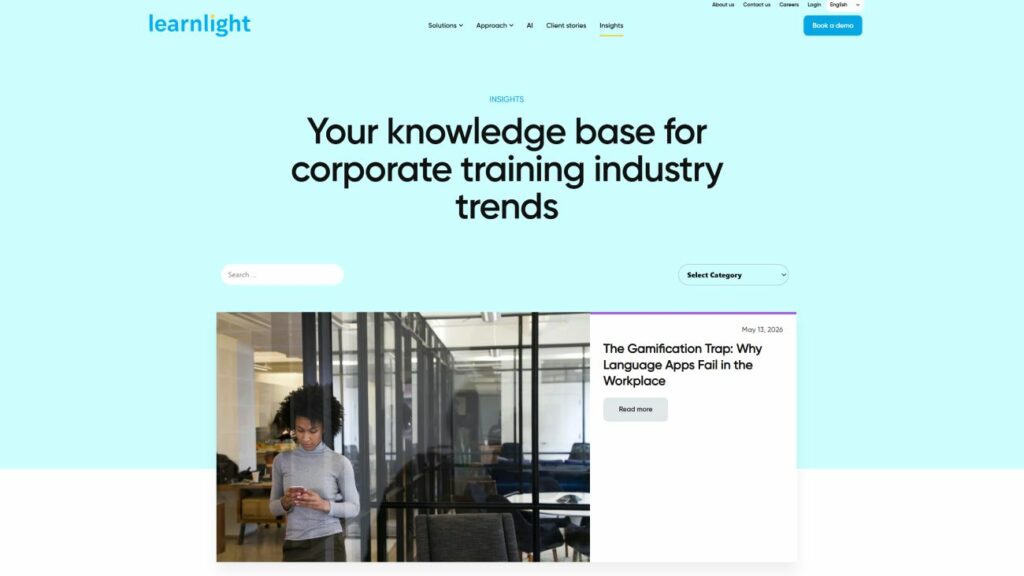
The centerpiece of that strategy was nurturing Learnlight’s Insights blog. Consistent, high-quality content publishing proved to be one of the most effective ways to build E-E-A-T (Experience, Expertise, Authoritativeness, Trustworthiness) – Google’s framework for evaluating content quality, and increasingly a proxy for how buyers themselves judge whether a company knows what it’s talking about.
Alongside content creation, I ran a full technical SEO audit process:
- Screaming Frog crawls across the entire website to catch broken links, indexing issues, duplicate content, and structural errors
- Core Web Vitals monitoring to identify technical performance issues affecting both search rankings and user experience
- Silo structuring and internal interlinking strategy, organizing content into clear topical clusters that reinforced topical authority and helped both users and search engines navigate the site logically
- Ongoing monitoring via Google Analytics and Google Search Console, tracking organic performance and catching issues or opportunities early
The result was consistent, ambitious-but-realistic organic growth across Learnlight’s core product lines – growth that didn’t rely on one-off wins but on a compounding content and technical foundation.
Fixing the Sales-Marketing Trust Gap: Lead Scoring That Actually Worked
Here’s the part that often gets ignored in paid media case studies but is arguably just as important: none of this matters if Sales doesn’t trust the leads Marketing sends them.
That was exactly the complaint I inherited. Sales was frustrated with lead quality – too many students, too many low-value signups mixed in with genuine enterprise buyers. When that happens, sales reps stop trusting MQLs entirely, and the whole lead handoff process breaks down regardless of how good the top-of-funnel numbers look.
To fix this, I implemented a lead scoring framework directly in HubSpot, built around two dimensions:
- Firmographic criteria – Primarily company size, to filter for accounts that actually matched Learnlight’s enterprise ICP
- Behavioral signals – Specifically actions like viewing pricing pages, which are a strong indicator of genuine buying intent versus casual browsing
By combining these two layers, the system could automatically separate high-intent SQLs from students and low-value signups, ensuring Sales only spent their time on high-value enterprise accounts. This single change did more for the relationship between Marketing and Sales than any amount of additional lead volume ever could have – because it restored trust in the pipeline itself.
Middle-of-Funnel: Bridging Cold Traffic to Demo Bookings
Getting someone into the funnel is one thing. Getting a cold, unaware visitor to a booked demo is a completely different challenge – especially for a considered B2B purchase like enterprise language training.
To bridge that gap, I built out dedicated Middle-of-Funnel (MoFu) assets, including:
- High-intent comparison pages (Learnlight vs. specific competitors), aimed at buyers who were already evaluating options and searching comparison-style queries – some of the highest-intent, lowest-competition content you can build in a category with defined competitors
- An interactive ROI calculator, which became one of the most strategically important assets in the entire funnel
The logic behind the ROI calculator was simple but powerful: L&D and HR directors don’t make purchasing decisions in a vacuum. They need to justify the spend internally, often directly to a CFO. An abstract pitch about “improving communication” doesn’t survive a budget review. A tool that lets them calculate the exact financial cost of language barriers within their own teams gives them a concrete, defensible number to bring into that conversation.
That calculator did double duty – it was a genuinely useful tool for prospects, and it was a mechanism for converting cold, research-stage traffic into demo bookings by giving buyers the internal ammunition they needed to move forward.
Multi-Touch Attribution: Making Sense of a 6-to-12-Month Sales Cycle
Enterprise B2B sales cycles at Learnlight’s scale routinely run six to twelve months, with multiple stakeholders and touchpoints along the way. In that environment, last-touch attribution is close to useless – it credits whichever channel happened to be present at the final moment, ignoring everything that built the relationship beforehand.
To address this, I implemented multi-touch attribution within HubSpot, with particular attention to leads originating from LinkedIn – a channel that, in B2B, frequently plays an early-stage brand-building role rather than a last-click conversion role. Without multi-touch attribution, LinkedIn’s actual contribution to pipeline would have been consistently undervalued, and budget decisions would have been made on incomplete data.
This gave the team a much more accurate picture of which channels and campaigns were actually driving revenue across the full sales cycle – not just which one happened to close the deal.
The Bigger Picture
None of these pieces worked in isolation. The website restructure enabled the landing page strategy. The landing page strategy made the paid media ecosystem effective. The paid ecosystem’s retargeting layer kept visitors in the funnel long enough for the SEO and content strategy to build trust. The lead scoring framework made sure Sales actually acted on the leads that came through. The MoFu assets and ROI calculator turned research-stage interest into booked demos. And multi-touch attribution made sure the whole system could be measured and optimized accurately over time.
That’s the real takeaway from this project: growth for a company like Learnlight was never going to come from optimizing one channel in isolation. It came from treating acquisition, conversion, content, and attribution as one connected system – and fixing the structural gaps (a non-convertible website, missing retargeting, an unscored lead pipeline, distrust between Sales and Marketing) that no single campaign tweak could have solved on its own.