
SEA Agency Spain: Navigating the Spanish Digital Market
Expanding into Spain offers enormous opportunities with over 40 million online customers and a booming e-commerce market. But success requires more than simple translation.
Search Engine Advertising (SEA) acts as your turbo booster. Choosing the right partner determines whether you turn a profit or burn budget. Learn what to look for to sustainably achieve your goals in the Iberian market. 🚀✨
Cultural and Linguistic Competence: More Than Just Translation
Spanish may appear uniform at first glance, but Spain’s digital market is shaped by regional and cultural nuances. An effective SEA strategy must account for these subtleties.
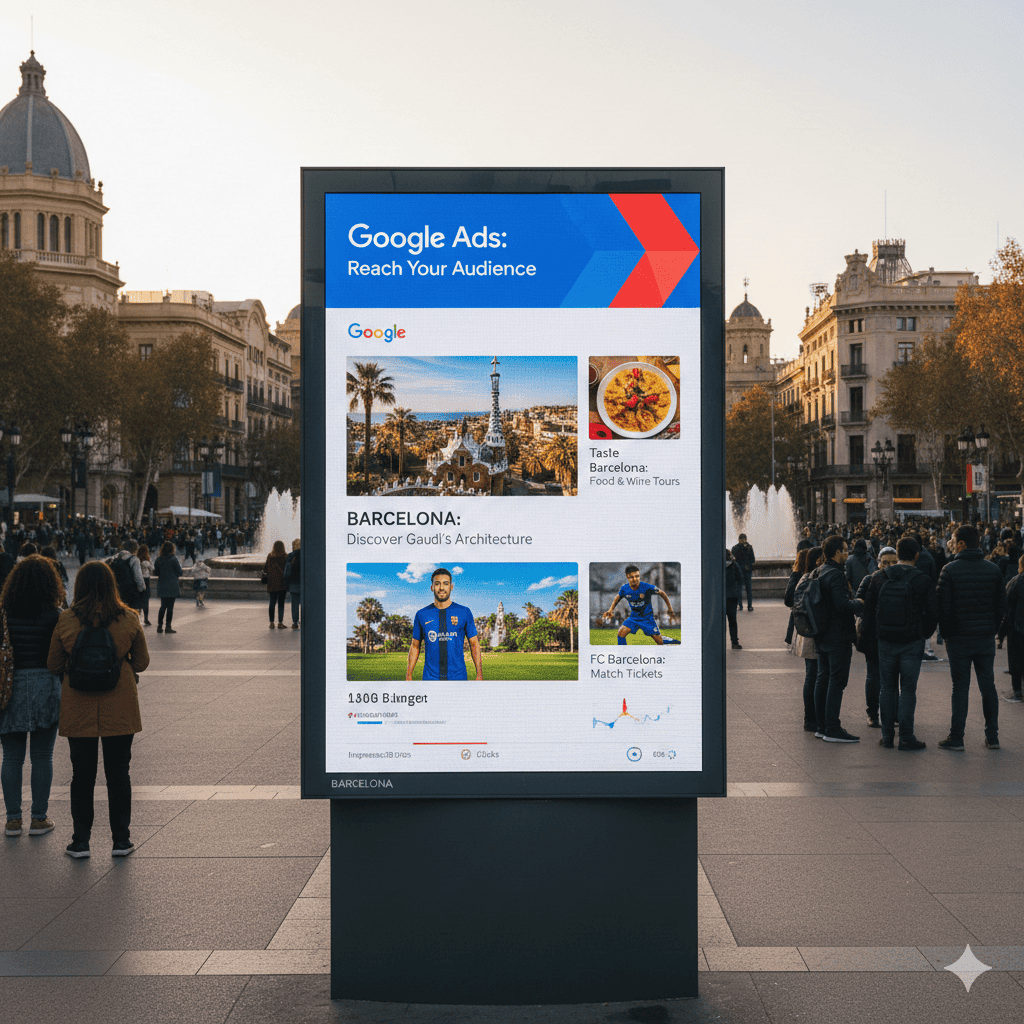
Keyword Research & Regional Intent
Simply translating foreign ads into Castilian will rarely succeed. Spanish search terms vary significantly—not just regionally (e.g., between Barcelona and Madrid), but also in purchase intent and local expression. A native speaker identifies high-intent terms to optimize your strategy.
Cultural Relevance of Ad Copy
What counts as professional in Germany can come across as too stiff in Spain. Ads need to be authentic, engaging, and tailored to the Spanish consumer in tone, imagery, and CTAs to maximize click-through and conversion rates.
Technical Foundation and Performance Focus
Technical execution and a focus on measurable results are the pillars of a successful SEA partnership. A top-tier agency stands out through a clear, data-driven, and transparent way of working.
Mobile-Dominated & Mobile-First Strategy
Nearly half of Spanish internet users primarily access the internet via smartphone. An SEA agency needs a technically sound, mobile-first strategy—optimizing ad delivery, landing page performance, and Core Web Vitals for high rankings and low CPA.
Goal-Setting & ROI-Oriented Approach
A reputable agency asks about your business goals first, not your budget. With outcome-oriented billing and transparent bidding logic, they ensure ads are only served when there is genuine purchase intent to avoid burning money.
Transparency, Reporting, and Continuous Optimization
Search engine advertising isn’t a one-time setup — it’s a marathon that requires constant monitoring and adjustment. The quality of reporting and process transparency are therefore crucial for a trustworthy partnership.
Detailed, Meaningful Reporting
A simple PDF with three metrics isn’t enough. The agency must deliver reports that connect costs, impact (conversions, revenue), and required actions. Honest communication about timelines (3 to 6 months for major results) is a strong sign of credibility.
Ongoing A/B Testing & Frequency
The best agencies treat campaigns as an ongoing testing process. With consistent A/B testing of ad copy, audience settings, and landing page elements, they constantly monitor shifts in user behavior within the Spanish market.
Quality of Conversion Tracking
An often underestimated aspect is the quality of conversion tracking. Precise, regularly audited tracking is the foundation for every data-driven decision so you always know which campaigns are actually profitable.
Local Know-How and Industry Experience
While SEA principles are global, local knowledge in Spain is indispensable. The Spanish market has specific competitive conditions and regulatory quirks.
Based in Spain & Local Presence
Ideally, the agency is either based directly in Spain or has a dedicated Spain team. This local presence provides better insight into regional search volume, pricing within auction systems, and cultural nuances across cities like Barcelona or Madrid.
Industry Experience & References
Check whether the agency has industry experience (e.g., hospitality, e-commerce, technology). Always ask for references and case studies from clients who have succeeded in Spain or similar international markets.
Google Partner Certification
Look for a Google Partner certification. This guarantees staff have required Google Ads knowledge, prove competence through regular exams, and offer trusted expertise in Spain’s top search engine.
Cost Structure and Fee Negotiations
Costs for SEA services can vary widely. But an unusually low price should always be a red flag.
Quality Has Its Price
Fees significantly below market average often lead to inadequate support, standardized mass-processing, or inexperienced staff. Don’t just ask what you’re paying — ask what you’re getting for it, including transparent pricing structures.
Fee vs. Ad Budget Separation
A clear separation between agency fee and ad budget is essential. Your ad budget goes entirely toward running ads, while the fee covers strategic work, optimization, and reporting without hidden contract clauses.
Demonstrated Added Value
An experienced agency that achieves higher conversion rates and a better ROI is far more profitable than a cheaper offer that merely generates clicks but no sales.
Strategic Involvement and Partnership
The relationship with your SEA agency should be seen as a genuine partnership among equals. The agency should involve you in the strategy and help you understand the significance of the measures taken.
Foundation of Your Business Knowledge
No one knows your business better than you do. The agency should actively involve you in the process, develop the strategy together, and explain Google Ads mechanics clearly using a teaching approach.
Interpreting & Recommending Action
Responsible for more than just delivering numbers, the agency must interpret them and derive concrete recommendations for action—proposing new campaigns, ad tests, and landing page improvements regularly.
Proactive Management vs. Waiting
Active management of bidding strategies and quick error prevention distinguish a true partner from a mere service provider that only waits for instructions in the dynamic Spanish digital market.
Conclusion: Choosing the Right Partner for Spain
Choosing an SEA agency in Spain is a strategic business decision. Success in the Spanish digital ecosystem requires a combination of technical excellence, cultural and linguistic localization, and a transparent, results-oriented partnership. The best agency for your business is the one that understands your individual challenges, isn’t afraid to ask critical questions, and whose way of working is grounded in continuous optimization and measurable ROI.
Take Action & Scale
Check references, demand cost transparency, and insist on a strategy that accounts for Spain’s linguistic and mobile-behavior particularities. With the right agency by your side, Spain can become one of your most important growth markets.
Let’s Scale Your Growth
Ready to dominate search results and maximize your return on ad spend? Drop us a message and our team will get back to you shortly.

Send Us a Message
Fill out the form below and we’ll schedule a discovery call.
The 10 Most Important Questions to Ask a Potential SEA Agency in Spain
Ensure your market expansion is a success by vetting your digital partner with these critical questions covering localization, performance, mobile strategy, transparency, and pricing.
1. How do you ensure the cultural and linguistic localization of our campaigns, beyond mere translation?
This question probes the agency’s deeper understanding of the Spanish target audience. The answer should include details on the use of local slang, consideration of regional search terms (e.g., Castilian vs. Catalan in ads), and the cultural appropriateness of ad imagery and copy. A good agency will talk about its team of native Spanish speakers and their local market expertise.
2. Which KPIs matter most to you in the Spanish market, and how do you measure actual ROI?
This is about performance orientation. Expect answers focused on CPA (Cost per Acquisition), ROAS (Return on Ad Spend), and conversion rate — not just clicks or impressions. The agency should be able to explain how it aligns these KPIs with your specific business goals and how it sets up conversion tracking in the Spanish environment.
3. How do you integrate a “mobile-first” mindset into your SEA strategy for the Spanish market, where mobile usage dominates?
Spain is a mobile-dominated market. The answer must include specific mobile strategies, such as optimizing ad extensions, prioritizing responsive search ads, and advising on the speed and usability of mobile landing pages. It should show that the agency understands the technical challenges of mobile performance.
4. What does your continuous optimization process look like, and how often do you run A/B tests for ad copy and landing pages?
SEA requires constant testing. The agency should describe a clear, cyclical process involving regular A/B tests, search term analysis, and adjustment of bidding strategies based on current data. Optimization frequency should be at least weekly, or even daily for larger budgets.
5. How do you handle competition in the Spanish search market, and what strategies do you use to control cost per click (CPC)?
This tests strategic skill. A good answer covers the use of long-tail keywords for lower costs, focusing on a high Quality Score, and the strategic use of automated (Smart Bidding) and manual bid strategies to effectively manage spend in a competitive environment.
6. Can you show case studies or references from clients in similar industries that you’ve successfully supported in the Spanish market?
References and proven success are critical. The agency should be ready to show you measurable results (e.g., a X% increase in ROAS) from Spanish clients or clients with expansion projects in Spain. This builds trust and demonstrates relevant expertise.
7. How transparent is your reporting, and at what intervals do we receive reports along with an interpretation of the results?
Transparency is everything. The agency must confirm that reporting happens weekly or monthly and clearly distinguishes between budget, clicks, conversions, and resulting ROI. More importantly, it should not just deliver the numbers but also interpret them and derive concrete, data-backed recommendations for action.
8. How are your fees structured (fixed amount, percentage of budget, or hybrid), and what services are included?
The cost structure needs to be clear and unambiguous. Ask for a precise breakdown of management fees, setup costs, and any additional consulting services. Make sure the ad budget is strictly separated from the agency fee and that there are no hidden charges.
9. What mistakes should we absolutely avoid when expanding into Spain, and what best practices do you recommend?
This tests the agency’s proactive, advisory side. The answer should address common mistakes, such as neglecting regional languages (e.g., Catalan), using mismatched landing pages, or faulty conversion tracking. A proactive agency will offer immediately actionable advice.
10. Who will be our direct point of contact, and what qualifications (e.g., Google certifications) and experience in the Spanish market does this person bring?
The quality of the collaboration hinges on the person managing your account. You should get to know your dedicated, qualified point of contact and check their specific experience in the Spanish SEA landscape. Ask about the staff’s current Google Ads certifications to verify their professional competence.