
How to Find the Perfect Google Ads Agency for Your Business
The market for Google Ads agencies is saturated. From solo freelancers to global networks, more choice doesn’t equal quality. A mismanaged budget burns money and hands market share straight to your competitors.
🚀 Learn step by step how to choose the right partner — one who manages your clicks and drives sustainable growth for your business.
Why Choosing the Right Google Ads Agency Determines Your Success
Google Ads is no longer a “set it and forget it” channel. With increasing automation and AI (Smart Bidding, Performance Max), the role of an agency has fundamentally changed. Today it’s less about manually adjusting bids and more about strategic data feeding, creative excellence, and technical tracking.
The Strategic Difference: A bad agency will blindly pour your budget into automated campaigns without understanding the nuances of your business model. A good agency acts as a strategic partner — one who knows your target margins and feeds the algorithms the right signals. 🚀
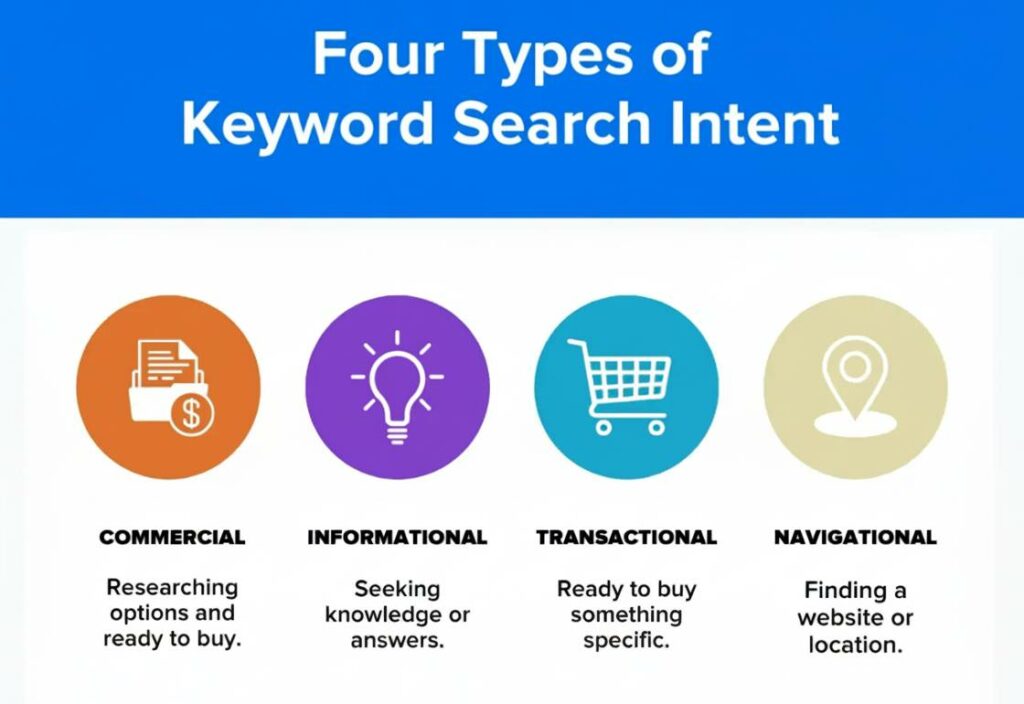
Define Your Own Goals: What Do You Actually Need?
Before you schedule that first call, you need to do your homework. “More revenue” isn’t a specific enough goal. Ask yourself:
KPI focus
Is this about lead generation (B2B) or direct e-commerce revenue?
Budget range
Small budgets (under €2,000/month) usually need efficient standard processes; larger budgets call for custom strategies and close monitoring.
Additional services
Do you need help with tracking (Google Tag Manager), ad creative design, or conversion rate optimization (CRO) for your landing pages?
Google Partner Status: A Quality Seal or Just Marketing?
Many agencies proudly display the Google Partner or Premium Partner badge.
Google Partner
The baseline requirement (certifications, budget management, performance).
Premium Partner
Among the top 3% of agencies in a given country.
Important: Partner status is a necessary condition, but not a sufficient one. It confirms the agency knows how to use the tools — it says nothing about their strategic understanding of your specific business model.
Specialist vs. Full-Service: What Fits Your Structure?
There are two schools of thought:
Specialists
Agencies that only do Google Ads. Advantage: extremely deep expertise and a direct line to Google’s teams.
Full-service agencies
They cover SEO, social media, and ads. Advantage: a holistic marketing picture and less coordination work for you.
If Google Ads is your most important growth channel, you’re often better off with a specialized boutique agency. If you want a “worry-free, all-in-one package,” full-service is the way to go. 🚀

Transparency and Account Access: Spotting the Red Flags
One absolute dealbreaker: who owns the Google Ads account?
The rule
The account must always belong to you. You should have admin access, with the agency simply linked in via a manager account (MCC).
The red flag
Agencies that create accounts under their own name and deny you access are tying you to them in an unhealthy way. End the relationship, and your historical data goes with it.
Understanding Fee Models: Are the Right Incentives in Place?
How does the agency get paid? Every model has trade-offs:
Percentage of ad spend
Common (often 10–20%). Downside: the agency has an incentive to raise your budget, even if efficiency drops.
Flat fee (retainer)
Predictable for both sides. Fair when the scope of work is clearly defined.
Performance fee
The agency shares in the results. Sounds great, but often leads to disputes over attribution (which channel actually drove the sale?).
Behind the Scenes: Who Actually Manages Your Account?
In the pitch meeting, it’s usually the experienced senior strategist or the agency owner sitting across from you. But who’s actually pushing the buttons day to day? Ask directly in the interview:
Dedicated Contact
“Who will be my dedicated point of contact?”
Client Load Ratio
“How many clients does this account manager handle at once?” (A ratio of 1:20 leaves little room for deep analysis.)
Reporting Rhythm
“How often do reporting calls happen?”
Case Studies and Industry Experience: Theory vs. Practice
Ask to see case studies similar to your industry. An agency that excels in B2B machinery manufacturing won’t necessarily understand the dynamics of a fast-moving fashion e-commerce store. Pay attention to whether the case studies cite real business numbers (ROI, ROAS, CPA) or only “soft” metrics like impressions and clicks. Feel free to explore my portfolio to see proven real-world results.
Industry Relevance
Match agency experience directly with your sector’s distinct buyer journey and market dynamics.
Hard Metrics vs. Vanity
Insist on tangible bottom-line results (ROI, ROAS, CPA) rather than surface-level impressions and clicks.
The Importance of Technical Know-How and Tracking
Google Ads is a data game. Without proper server-side tracking or the implementation of Enhanced Conversions, every dollar of budget is wasted. A modern agency needs to be able to advise you technically. If an agency doesn’t proactively bring up “tracking & privacy” in the first conversation, that’s a warning sign.
Server-Side Architecture
Secure robust data pipelines and prevent budget waste through flawless attribution tracking.
Privacy & Compliance First
Proactive guidance on tracking, consent protocols, and data protection standards right from consultation one.
Communication and Chemistry: The Underrated Factor
In the best case, you’ll be working with these people for months or years. If the chemistry is off, or communication only happens through an anonymous ticketing system, the collaboration becomes a slog. Even the best strategy is worthless if it isn’t communicated clearly.
Long-Term Partnership
Build seamless, human-first working relationships built for months and years of sustained success.
Transparent Alignment
Discard anonymous ticketing systems for direct, crystal-clear dialogue that keeps your strategy sharp.
Conclusion: Making Your Final Decision
Choosing a Google Ads agency is an investment, not an expense. Don’t look for the cheapest provider — look for the one whose way of working best fits your internal resources.
Comprehensive Growth & Scaling
To ensure you find the absolute best fit for your unique business structure, I offer a full-service approach spanning SEO, SEA, and social ads. Every strategy is custom-built to scale your company efficiently.
Take advantage of expert audits and consulting: request an audit of your existing account to discover within 30 minutes how deep the analytical and strategic understanding really goes. 🎯🚀
Let’s Scale Your Growth
Ready to dominate search results and maximize your return on ad spend? Drop us a message and our team will get back to you shortly.

Send Us a Message
Fill out the form below and we’ll schedule a discovery call.
The 10 Most Important Questions When Searching for an Agency
Get clear, expert answers regarding costs, budgets, timelines, contracts, reporting, and why working with a professional partner pays off.
1. How much does it cost to work with a Google Ads agency?
There’s no one-size-fits-all model. Most agencies work with a combination of a one-time setup fee (for strategy and account structure) and a monthly management fee. This typically ranges from €500 to €5,000, or is calculated as a percentage (roughly 10–20%) of your monthly ad spend.
2. At what ad budget does hiring an agency actually make sense?
Rule of thumb: if the agency’s fee is higher than your actual ad budget, it’s probably too early. Professional agencies usually make sense starting at a media budget of €1,500 to €2,000 per month, since at that point the leverage from optimization covers the agency’s fixed costs.
3. How long until I see the first results?
Technically, ads go live immediately. But since Google’s AI (Smart Bidding) needs a learning phase, you’ll typically see the first valid trends after about 2 to 4 weeks. Fully optimizing campaigns usually takes 3 to 6 months.
4. Do I have to commit to a long-term contract?
Avoid agencies that want to lock you in for 12 or 24 months before the chemistry has even been tested. Standard practice is a term of 3 to 6 months at the start to build a shared data foundation, often followed by a monthly cancellation option.
5. Who creates the ad copy and creatives?
It varies. Specialized Ads agencies often focus on copy and strategy but need images and videos from you. Full-service agencies typically have their own design teams. Be sure to clarify this handoff point upfront, since creative quality is now decisive for campaign success.
6. Will the agency guarantee me a specific ROAS or revenue figure?
Be wary of guarantees! Reputable agencies never guarantee specific sales numbers, since they have no control over your pricing, your product, or the user experience on your website. They should, however, be able to give you benchmarks from your industry.
7. Will I get regular reports, and what do they include?
A monthly PDF report is standard, but often isn’t enough. Ask for a live dashboard (e.g., via Looker Studio) where you can check real-time data on costs, conversions, and ROAS (Return on Ad Spend) at any time.
8. What happens if I switch agencies?
Make sure you remain the owner of the Google Ads account. When switching, you simply revoke the old agency’s access. All historical data, campaigns, and optimizations should remain in your possession.
9. How much time do I need to invest myself?
During the onboarding phase, your input needs to be intensive (goals, target audiences, products). After that, the time commitment drops to monthly or biweekly check-in calls of about 30 to 60 minutes. A good agency takes the workload off your plate, but still needs your feedback on business outcomes.
10. Why shouldn’t I just run Google Ads myself?
The tools are becoming more intuitive, but the complexity behind the scenes — tracking restrictions, bidding strategies, competitive pressure — keeps increasing. An agency helps you avoid expensive trial-and-error, has access to beta features individual users can’t get, and typically pays for itself by reducing wasted spend.