
Facebook Ads:
A Beginner-Friendly Guide to Best Practices
Facebook advertising (which today also covers Instagram, Messenger, and the Audience Network through Meta’s ad platform) is one of the most accessible ways for a business, blog, or side project to reach real customers. But “accessible” doesn’t mean “simple” — and if you’ve ever opened Meta Ads Manager for the first time, you know how quickly it can feel overwhelming.
This guide answers the core questions every advertiser asks before starting: tracking pixels, learning curves, budgeting, targeting, and whether it’s truly worth it. Let’s go through it step by step. 🚀🎯
Why Facebook Ads Are Still Worth Talking About
Despite the rise of TikTok, Google Ads, and other channels, Meta’s advertising platform remains one of the largest and most precise targeting engines available to advertisers globally.
Unmatched Audience Reach
Billions of people use Facebook and Instagram every month, giving Meta’s algorithm an enormous data pool to find the right person for the right ad.
Built for Growth & Speed
Small businesses, e-commerce stores, local services, and creators can start small, test quickly, and scale what works without massive upfront capital.
Precision Engine
No other advertising platform offers quite this unique combination of sheer reach, sophisticated targeting depth, and low entry cost.
Do I Need a Facebook Pixel (or the Conversions API)?
Short answer: yes, almost always. Without tracking data, Meta’s algorithm is essentially flying blind, unable to know whether users actually completed valuable actions after clicking your ad.
Campaign Optimization
Meta’s ad delivery system uses machine learning to find people likely to take specific actions. Without conversion data, it can only optimize for clicks or impressions.
Powerful Retargeting
The Pixel lets you build custom audiences of people who visited your site, viewed a specific product, or abandoned their cart so you can bring them back with follow-up ads.
Lookalike Audiences
Once you have enough Pixel data, Meta can find new people who resemble your best customers — consistently one of the highest-performing targeting strategies available.
Accurate Measurement
Without proper tracking infrastructure, you are guessing at your return on ad spend rather than measuring real, tangible revenue impact.
Is Facebook Advertising Difficult?
This entirely depends on what you mean by “difficult.” Getting an ad live is simple, but making it perform profitably is a different skill set.
Getting an Ad Live is Easy
You can create an account, upload an image, write text, set a budget, and publish a campaign within twenty minutes. Meta has intentionally made the interface approachable.
Consistent Profitability is Hard
Performance depends on avoiding common traps like wrong objectives, flawed targeting parameters, weak scroll-stopping creative, and premature optimization.
Are the Results Actually Good?
Yes — but “good” depends heavily on your industry, your offer, and how well you execute the fundamentals. Facebook Ads tend to perform exceptionally well across several core verticals.
Physical Products
E-commerce and physical products, especially visually appealing items, see strong traction with optimized campaigns reaching 3-5x ROAS or more.
Local Services
Restaurants, gyms, clinics, and contractors leverage precise local geographic targeting to drive high-intent appointments and foot traffic.
Digital Products & Subscriptions
Online courses, software, memberships, and digital subscriptions benefit greatly from funnel-based tracking and automated optimization.
Event Promotion & Ticket Sales
Rapidly capture consumer interest, build event awareness, and drive direct ticket sales at scale with interest-based segmentation.
Lead Generation & The Power of Testing
Higher-ticket services like real estate, coaching, and B2B thrive with proper lead funnels. What almost universally separates good results from poor ones is testing volume — advertisers who test multiple creatives and audiences consistently outperform those who don’t.
Is It Worth It?
For most businesses with an online presence, yes — with a caveat: it’s worth it if you treat it as a process, not a one-time purchase.
Facebook Ads Are Worth It When:
Facebook Ads Are Less Worth It When:
What’s the Ideal Budget?
There’s no single “correct” number, but there are useful guidelines. The biggest mistake beginners make is spending too little, spread across too many campaigns.
Focus on Data, Not Profit
For the first 1-2 weeks, Meta recommends a daily budget of at least €15-20 per ad set to gather enough clicks and conversions for algorithmic learning.
Target Weekly Conversions
Your daily budget should generate at least 15-20 conversions within a week per ad set to gather enough signal to exit the learning phase.
Common Starting Ranges
Consolidate Your Spend
It’s almost always better to run one or two focused campaigns with a real budget than five underfunded ones that never gather enough data to be evaluated fairly.
How Should I Start? A Step-by-Step Approach
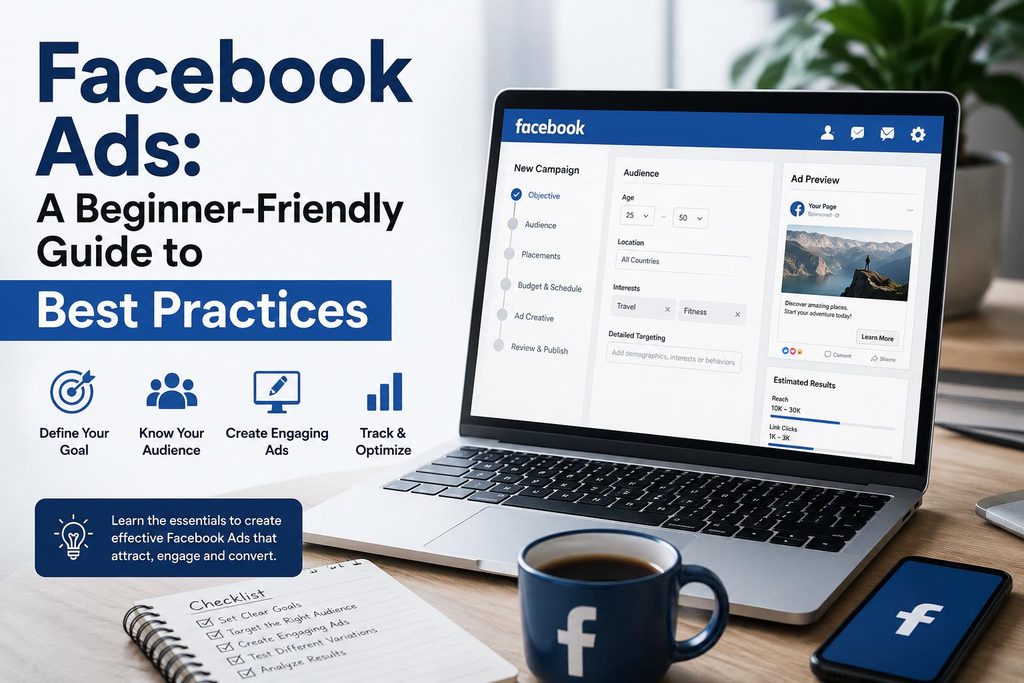
If you’re brand new to Meta Ads, following a sensible, structured sequence of operations ensures your capital builds momentum rather than getting wasted.
Set Up Your Foundation First
Create a Meta Business Suite account, install the Pixel and Conversions API on your website, and confirm tracking with Meta’s Pixel Helper before spending a single euro.
Define One Clear Goal
Don’t try to get sales, leads, and brand awareness all from the same campaign. Pick one core goal (purchases, leads, traffic, or engagement) to drive your Ads Manager setup.
Start With Simple Structure
Use one campaign with one or two ad sets, each containing 3-5 creative variations. This gives Meta’s algorithm room to find what works without spreading your budget too thin.
Build Genuinely Good Creative
Ad creative matters more than targeting. Use clear images or short videos, write copy speaking to specific problems, and rely on native-feeling content over corporate ads.
Let the Algorithm Learn
Avoid daily budget or audience changes. Meta needs roughly 50 conversions per ad set within 7 days to exit the learning phase and stabilize performance.
Review Weekly, Not Hourly
Check performance every few days rather than multiple times a day. Pause underperforming ads and shift budget toward winners in a practice called scaling.
Reinvest in Testing
Once something works, don’t stop there. Keep testing new creative and audiences alongside your winners because ad fatigue is real, and even top-performing ads eventually need refreshing.
Who Is Your Target Group? Understanding Facebook’s Targeting Options
This is where Meta’s platform genuinely shines compared to many alternatives. There are three broad targeting approaches, and most successful advertisers use a mix of all three over time.
Core & Detailed Targeting
Tell Meta parameters like age, location, gender, interests, and behaviors (e.g., women aged 25-45 interested in sustainable fashion). Great for early testing, though algorithms often prefer more freedom.
Custom Audiences
Audiences built from data you already own: Pixel visitors, email lists, Instagram engagers, or Facebook page interactors. This is typically your highest-converting segment.
Lookalike Audiences
Once you have a Custom Audience of buyers or leads, Meta finds new people sharing similar behaviors. A 1% Lookalike identifies those most closely resembling your best customers.
Broad Targeting
As Meta’s AI improves, starting broad (just age and country) and letting machine learning do the targeting through Pixel data and creative signals often outperforms narrow manual audiences.
Putting It All Together
Facebook Ads reward patience, testing, and good tracking far more than they reward cleverness or guesswork. The path that tends to work looks systematic and structured.
The Winning Path
Set up your Pixel and Conversions API properly, choose one clear goal, invest a real budget into a simple structure, and create genuinely compelling ad creative.
Data Over Budgets
Successful businesses aren’t necessarily those with the biggest budgets; they’re the ones willing to test consistently, track honestly, and adjust based on actual data.
Permission to Learn
Start small, track everything, and give yourself permission to learn — the same way anyone becomes proficient at anything new.