
Case Study: Building a Market
from Zero – My Magic Story
For two years, I helped scale an established German operation while building the French market from the ground up—launching the product, the book, and every single advertising channel around it.
This case study covers growing what already existed, building what didn’t, and uniting multi-channel marketing—from Pinterest and Facebook to affiliate, email, and foundational reporting infrastructure. 📚✨
Background
Personalized Storybooks
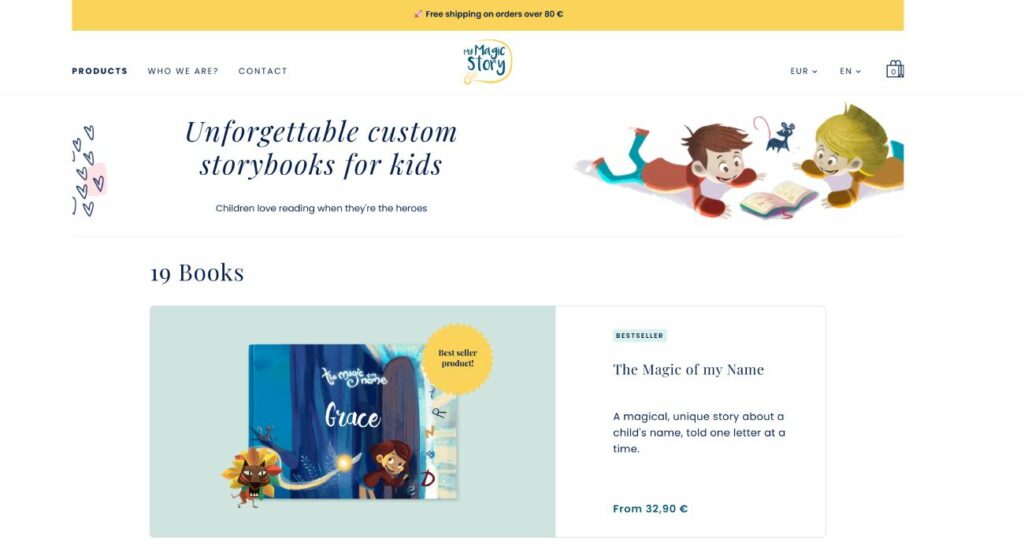
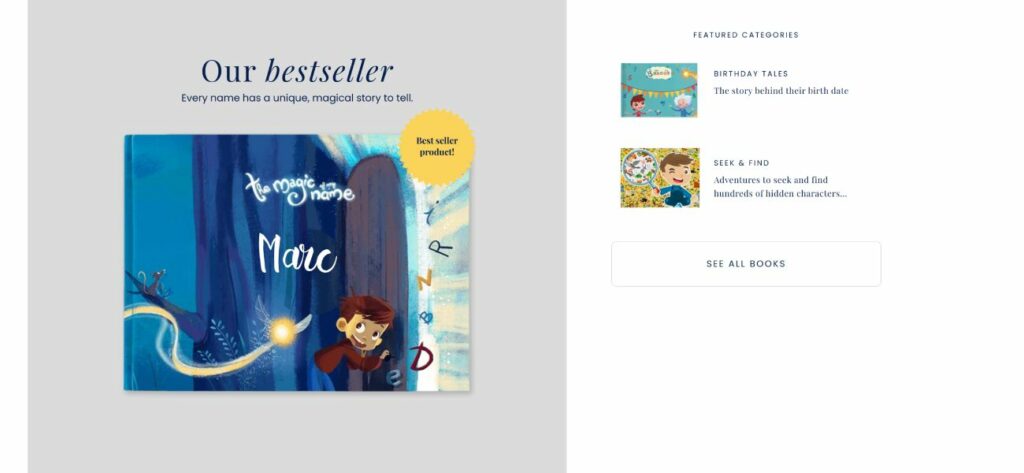
My Magic Story sells personalized storybooks – books in which a child’s name, appearance, and choices shape the narrative. It’s an emotional product built on a simple insight: nothing makes a child smile faster than seeing themselves as the hero of their own adventure.
Dual-Level Execution
That emotional core made the product highly shareable, but it also meant marketing had to work on two levels at once – performance (get the book in front of the right parent at the right moment) and storytelling (make that parent believe this gift is worth it).
Building from Scratch
When I joined, the German market already had a foundation. My task there was to grow an existing engine. The French market had no foundation at all – no localized book, no campaigns, no audience. I was given ownership of that market and built it from scratch.
Goals
The two-year mandate had distinct objectives for each market:
Scale Paid Channels
Scale the German marketing team’s paid channels – Google Ads and Meta Ads – beyond their existing baseline.
Launch from Zero
Launch the French market from zero: localize the product, build the book, and stand up every advertising channel required to sell it.
Day-One ROI
Get Google Ads profitable in France from day one, without a multi-month ramp-up period.
Reduce Paid Dependency
Build organic reach on Pinterest and Facebook to reduce long-term dependency on paid acquisition.
Professionalized Dashboard
Professionalize reporting so that performance across markets and channels was visible in a single place.
Growing the German Market
Foundational Growth
The German market wasn’t a blank page – it had a marketing team, existing campaigns, and a working baseline. My role was to grow it further, with a focus on two channels: Google Ads and Meta Ads.
Google & Meta Strategy
Rather than experimenting with new channels, the priority was to deepen what was already working. On Google Ads, that meant refining keyword segmentation around gifting occasions – birthdays, Christmas, christenings – since personalized books are almost always bought as a gift, not a routine purchase. On Meta, the focus shifted toward creative testing and audience layering, since a highly visual, emotional product performs disproportionately well on image- and video-first placements.
Blueprint for France
The German experience became the template I later adapted – much faster – when building the French market from nothing.
Building the French Market From the Ground Up
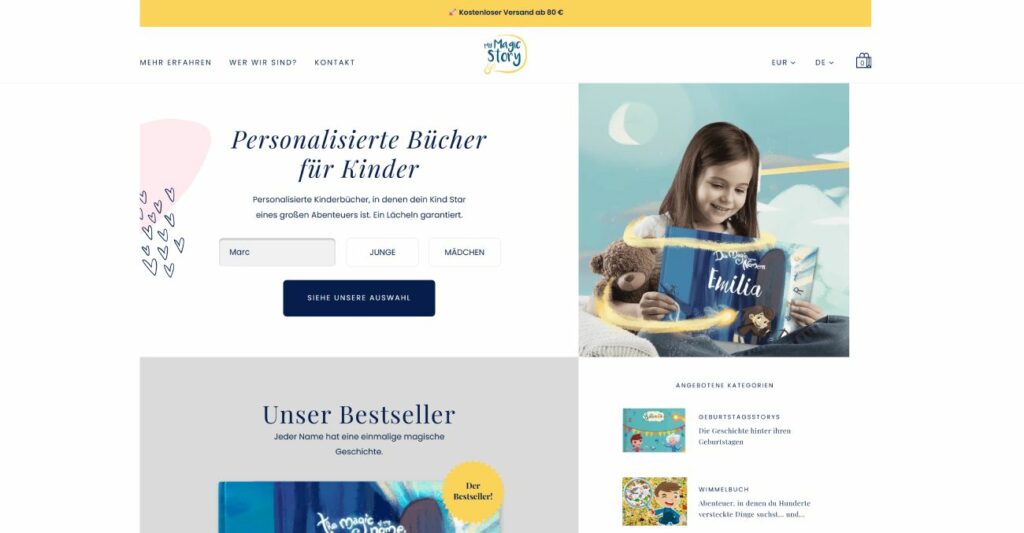
This is where the work differed fundamentally from a typical “grow the ad account” mandate. In France, there was no book, no campaign structure, and no audience. I led the French project end-to-end.
What “from zero” actually meant:
Product Creation
Localizing and building the French version of the book itself – not just translating copy, but adapting the storytelling to a French audience.
Full Advertising Build-Out
Every campaign, every channel, every piece of creative had to be created – there was no existing account to optimize.
Google Ads from Day One
The Google Ads account was structured and launched to be profitable immediately, rather than treated as a long testing phase. It worked from the very first campaigns and stayed a reliable, consistent channel throughout.
Pinterest: Organic Content for a Mom-First Audience
Mom-First Shopping
The core buyer for My Magic Story is a mom shopping for a gift – for her own kids, a niece or nephew, or a friend’s child. Pinterest is where that audience plans, saves, and gets inspired, which made it a natural fit for organic growth.
Gifting Moments & Emotional Pins
I built a consistent stream of organic Pinterest content – pins designed around gifting moments, birthday inspiration, and the emotional payoff of a personalized book – rather than treating the platform as a paid-only channel.
Long-Tail Discoverability
Because Pinterest content has long-tail discoverability (a pin can keep driving traffic months after it’s published), this organic push became a compounding source of traffic that didn’t rely on daily ad spend to keep performing.
Growing the Facebook Community to 118k Followers
Organic Growth to 118,000
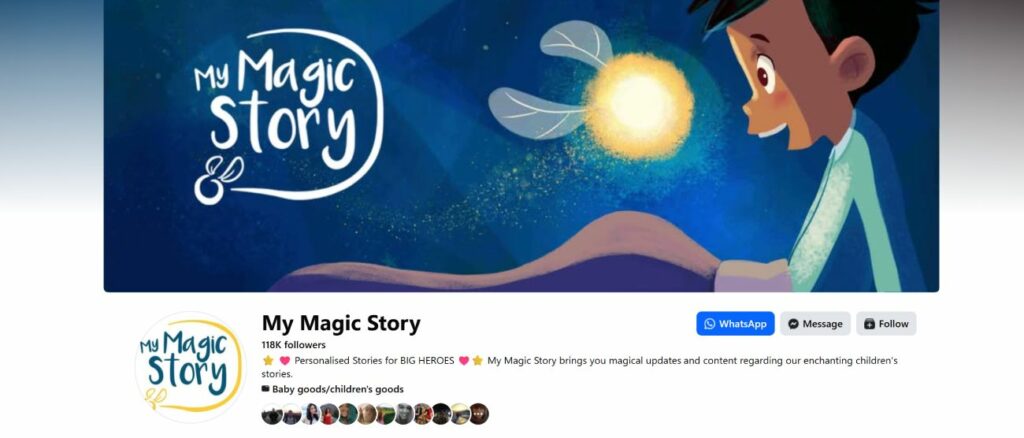
Alongside the paid work on Meta Ads, I contributed to growing the brand’s Facebook community to 118,000 followers.
Beyond Vanity Metrics
A community at that size does more than vanity-metric work – it becomes a distribution channel of its own, a source of social proof for new visitors.
Creative Validation
It acts as a testing ground for creative before it goes into paid rotation.
Affiliate Management Through Zanox
Zanox Program Management
Beyond owned and paid channels, I managed the brand’s affiliate program through the Zanox platform (now Awin).
Publishers & Commissions
This meant recruiting and managing partner publishers, tracking commission structures, and making sure affiliate traffic was contributing incremental sales rather than cannibalizing existing paid or organic conversions.
Avoiding Low-Quality Traffic
Affiliate marketing is easy to under-manage – left alone, it tends to drift toward low-quality traffic – so active oversight of partner quality was a constant part of the role.
Email Marketing With Mailchimp
Monthly Newsletters
I was responsible for the brand’s monthly newsletter, built and sent through Mailchimp.
Staying Top-of-Mind
For a gifting product, email is less about constant selling and more about staying top-of-mind for the next occasion – a birthday coming up, a holiday approaching, a new book category launched.
Design & Segmentation
Two things mattered most here: design and target group segmentation. The visual design had to reflect the same emotional, high-quality feel as the product itself, since a plain-looking newsletter undersells a premium personalized gift. And segmentation – sending the right content to parents versus gift-buyers, or by language market – kept engagement meaningfully higher than a single blanket send ever could.
SEO Foundations: Analytics, Search Console, and Site Architecture
Paid and organic social weren’t the only channels under my watch. I also handled ongoing content monitoring through Google Analytics and Google Search Console, tracking how organic traffic moved across the site and where opportunities were being left on the table.
Analytics & Search Console
Tracking how organic traffic moved across the site and identifying optimization opportunities.
Silo Structure & Interlinking
Part of that work involved building out a silo structure and interlinking strategy – organizing content (book categories, occasions, themes) into clearly defined topical clusters and linking between them logically.
Search Engine Understanding
This kind of architecture helps search engines understand which pages are most important and how they relate to each other, which compounds the value of every new piece of content published rather than leaving it isolated.
Reporting: Turning Data Into Decisions
None of the channel work above is worth much if leadership can’t see it clearly. I built out what I’d call world-class reporting for the marketing team – a live dashboard, supporting Excel sheets, and campaign-level reporting through Swydo.
Live Dashboards & Excel
The goal was always the same: make performance visible at a glance, across markets and channels, without requiring someone to dig through five different ad platforms to understand whether the business was growing profitably.
Swydo Integration
Swydo pulled together the paid channels automatically; the dashboard and Excel layer gave a market-by-market view that combined paid, organic, affiliate, and email performance into one picture.
Cross-Channel Clarity
Ensuring all streams—from paid acquisition to email retention and affiliate networks—are transparently consolidated for high-level strategic alignment.
Results at a Glance
Over two years:
Zero-to-One Launch
Built from zero to a fully operational market – product, book, and advertising infrastructure – with Google Ads profitable from launch.
Baseline Scaling
Scaled beyond its existing baseline across Google Ads and Meta Ads.
Facebook Followers
Grown to 118,000 followers.
Pinterest Target Audience
Sustained organic content output targeting a mom-first audience, building a compounding, low-cost traffic channel.
Zanox Affiliate Management
Actively managed through Zanox, with ongoing partner and commission oversight.
Mailchimp Email Strategy
Monthly Mailchimp newsletter with design and segmentation built around target groups.
Centralized Reporting & Dashboards
Centralized dashboard, Excel reporting, and Swydo-based campaign tracking across all markets.
Key Insights
Owning a market end-to-end changes how you market it
Leading the French market from product creation through to paid acquisition meant every campaign was built with a real understanding of what the product promised – not just what converted.
Organic channels compound
Pinterest and Facebook weren’t side projects; they became durable traffic and community assets that reduced reliance on daily ad spend.
A gifting product needs occasion-based thinking
Whether it was Google Ads keyword structure, the newsletter calendar, or Pinterest content, the common thread across every channel was building around the moments – birthdays, holidays – when people actually buy.
Affiliate channels need active management
Left unmonitored, affiliate traffic tends to drift toward low quality; ongoing oversight through Zanox kept it contributing real, incremental value.
Reporting is a growth lever, not an afterthought
A dashboard that made cross-market, cross-channel performance visible at a glance made it possible to reallocate budget and attention quickly, instead of reacting weeks late.
Disciplined Execution
Comprehensive alignment across performance marketing, organic growth, and analytics built a robust, profitable framework.
Conclusion
Two Years Across Channels
Two years at My Magic Story meant working across the full spectrum of digital marketing – from scaling an established German paid media operation, to building a brand-new French market from the product up, to running organic Pinterest and Facebook growth, affiliate management, email, SEO, and reporting in parallel.
Ownership & Structure
The common thread across all of it was ownership: not just running campaigns inside someone else’s structure, but building the structure itself where it didn’t exist, and making sure every channel – paid, organic, affiliate, and email – was working toward the same goal and visible in the same dashboard.
End-to-End Experience
That’s the kind of end-to-end experience I bring to every client project today: not just optimizing what’s already there, but knowing how to build a market from nothing when that’s what’s needed.
Frequently Asked Questions
01 What was your role at My Magic Story?
Over two years, I worked on the marketing team with two core responsibilities: growing the already-established German market across Google Ads and Meta Ads, and building the French market from the ground up – the product, the book, and every advertising channel around it.
02 What’s the difference between the German and French market work?
The German market already had a marketing foundation in place, so my job was to scale what existed. The French market had nothing – no localized book, no campaigns, no audience – so I led that market end-to-end, from product creation through to paid acquisition.
03 How did Google Ads perform in the French market?
The Google Ads account for France was structured to be profitable from day one rather than going through a long testing phase. It worked from the very first campaigns and remained a consistently reliable channel throughout.
04 What did the Pinterest strategy involve?
The core buyer is typically a mom shopping for a gift, and Pinterest is where that audience plans and gets inspired. I built a consistent stream of organic Pinterest content around gifting moments and birthdays, creating a compounding traffic source that didn’t rely on daily ad spend.
05 How big did the Facebook community grow?
The brand’s Facebook community grew to 118,000 followers, becoming both a distribution channel in its own right and a source of social proof for new visitors.
06 How were affiliates managed?
Affiliates were managed through the Zanox platform, including recruiting and overseeing partner publishers and monitoring commission structures to make sure affiliate traffic added incremental sales rather than cannibalizing existing paid or organic conversions.
07 What did the email marketing work look like?
I ran the monthly newsletter through Mailchimp, with a strong focus on design quality and target group segmentation – since a personalized gifting product needs a newsletter that reflects the same premium, emotional feel as the book itself.
08 What SEO work was involved?
I monitored organic performance through Google Analytics and Google Search Console, and built a content silo and interlinking strategy to organize book categories and themes into clear topical clusters that strengthen each other over time.
09 How was performance reported?
I built a reporting system combining a live dashboard, Excel sheets, and Swydo, giving a market-by-market view that combined paid, organic, affiliate, and email performance in one place – instead of digging through separate ad platforms.
10 What’s the main takeaway from this case study?
That building a market from scratch and scaling an existing one require different skill sets, but both come down to the same principle: owning the full picture – product, channels, and reporting – rather than optimizing a single piece in isolation.