
Google Display Ads: Why I’m Finally Opening the Doors to Display
For over a decade and a half, search and shopping ads have been my bread and butter—predictable, quantifiable, and ruthlessly efficient for capturing high-intent buyers in Barcelona and beyond. But examining raw client data every single day reveals a hard truth: if you are only running Search ads, you are leaving an immense amount of money on the table.
🚀 Discover why expanding beyond search into Google Display Ads is the next critical evolution for capturing market share and scaling your growth effectively.
Beyond Search: Priming Demand with Visual Campaigns
High-intent search traffic is becoming more expensive by the quarter. Capturing demand at the bottom of the funnel is vital, but what happens when you’ve maxed out that search volume? How do you prime the pump so that people search for your brand name instead of a generic industry term?
Standalone Display Services
To solve this full-funnel challenge for clients, massive visual campaigns have been tested and scaled behind the scenes. Today, Display Advertising and Display Remarketing are officially open as dedicated, standalone services.
A Data-Driven System
You don’t need a bloated, multi-tiered agency to run sophisticated visual campaigns. You just need a methodical, data-driven system executed by someone who actually owns the outcome.
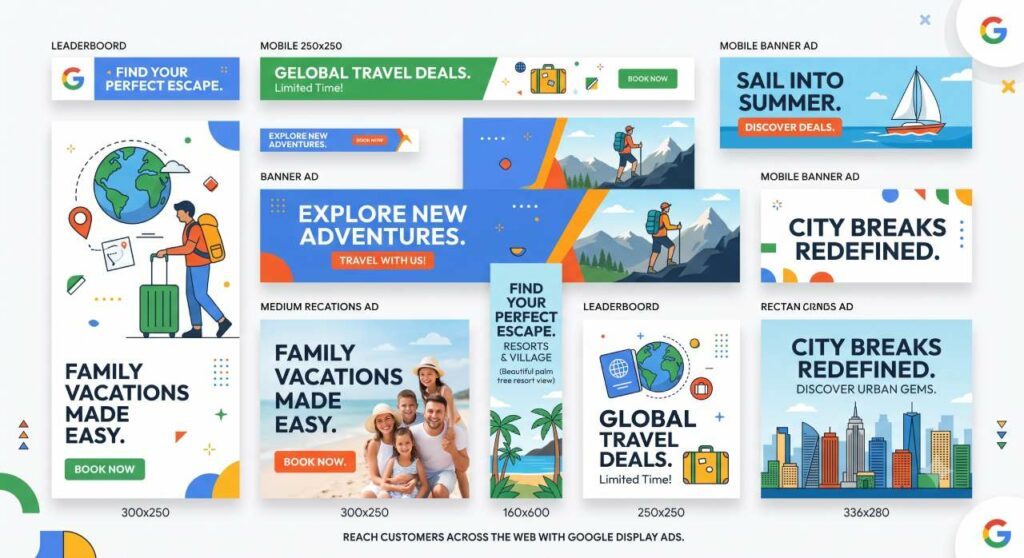
The Realist’s Guide to Display: Where the Results Actually Live
Let’s be honest: if an agency promises that a cold Google Display campaign will instantly double your direct sales, walk away. That is not how the channel works.
1. Brand Equity & Presence
The first purpose is pure brand equity and presence. It builds subconscious familiarity by keeping your logo top-of-mind while prospects browse their favorite news sites or blogs.
2. High-ROI Remarketing
If you want to drive measurable business results without burning through budget, the true magic happens when you deploy Display strictly as a Remarketing tool.
Retargeting Website Visitors
Instead of blasting visual ads to strangers, our approach focuses heavily on retargeting the people who have already visited your website—those who looked at services, read case studies, or abandoned a cart.
Securing High-Value Drop-Offs
Using the Google Tag to securely identify these drop-offs, we serve tailored visual ads that gently remind them of your brand as they navigate the web, nudging warm users back to finish what they started.
The Digital Marketing Grid: Search vs. Social vs. Display
To understand why you need Display, we have to look at how it contrasts with the platforms you are likely already paying for. It comes down to a fundamental strategic shift: Pull marketing versus Push marketing.
Google Search Ads: The Ultimate “Pull”
Search ads are the epitome of pull marketing. The user has a problem, they type it in, and you present the solution. It’s highly effective, but it comes with a premium price tag and high CPCs because you are competing for that exact moment of intent.
Social Ads: The Interruption Game
Social media advertising (Meta, LinkedIn) is push marketing. Users are there to look at photos or catch up on news. You interrupt their scrolling with a targeted ad. It works well, but it exists inside a “walled garden” dependent on that specific app’s ecosystem.
Google Display Network: The Omnipresent Layer
GDN isn’t a single website—it’s a massive web of over 2 million websites, news portals, blogs, and mobile apps reaching over 90% of global internet users.
Natural Audience Touchpoints
When you run Display ads, you aren’t waiting for searches or trapping users in a social feed. You place visual, highly compelling ads across digital properties your audience visits naturally throughout their day—news sites, industry blogs, or YouTube.
Fractional Cost & Subconscious Recognition
Because the user isn’t actively looking to buy at that exact micro-second, the cost-per-click is a fraction of Search. You get massive, un-throttled visibility and subconscious brand recognition without draining your budget.

Let’s Address the Elephant in the Room: Does Display Still Work?
I can hear the skepticism already. “Marc, come on. Banner blindness is real. Everyone uses ad blockers. Nobody clicks on banner ads anymore.”
If we were talking about the old way of doing Display—the classic “spray-and-pray” methodology where you blast an ugly, generic animated GIF to millions of random people—I would completely agree with you. That version of Display advertising is dead, buried, and good riddance.
But modern Display advertising is entirely different. It works because it has been supercharged by Google’s advanced machine learning and contextual targeting. Here is why it is an absolute powerhouse for mid-sized businesses today:
Intent-Based Audiences
Google knows what people are searching for. We can build “Custom Intent” audiences on the Display Network, serving visual ads to people only if they have recently searched for your competitors or specific industry terms on Google.
Responsive Display Ads (RDAs)
We no longer upload rigid, single-size banners. Instead, we feed Google’s engine clean assets—high-quality images, clean logos, and punchy headlines. Google’s AI automatically tests and pieces these elements together in real-time.
The Long-Game of Brand Equity
Success isn’t measured solely by immediate clicks. It’s about mental real estate. When a prospect sees your clean professional visual ad across multiple business sites, your brand becomes familiar. You bypass expensive Search bidding wars.
The Power of Display Remarketing (And Demystifying the “Pixel”)
If top-of-funnel Display advertising is about introducing yourself, Remarketing is about closing the deal.
Statistically, about 97% of the people who visit your website for the first time will leave without buying anything or filling out a form. They got distracted, their phone rang, or they just weren’t ready. Without a remarketing strategy, that traffic—and the money you spent to get it—is gone forever.
How the Google Tag Works
It all starts with a tiny piece of code called the Google Tag (historically referred to as a tracking pixel or snippet) that I install on your website.
The Digital Concierge
Think of this code as a digital concierge. When a user lands on your site, the Google Tag notes their behavior anonymously, dropping a secure digital identifier (via browser cookies or privacy-compliant signals) into their browser.
Cross-Web Recognition
When that user browses news or YouTube later, ad slots communicate with Google. Google recognizes the identifier: “Hey, this user looked at the pricing page on marckugge.com yesterday. Let’s show them Marc’s tailored banner ad right now.”
Why My Approach to Remarketing is Different
Most agencies set up remarketing carelessly, resulting in stalker-like behavior that annoys potential customers. I approach this with surgical precision to protect your brand’s reputation:
Frequency Capping
I hard-code limits into your campaigns so a user never sees your ad more than a few times a day. We want to be memorable, not creepy.
Custom Audience Segmentation
We shouldn’t show the same ad to everyone. A user who spent 10 minutes on checkout should see a specific testimonial or incentive, rather than someone who bounced off your homepage.
Dynamic Remarketing
For e-commerce and software clients, we connect product feeds directly to ads. If a user viewed a specific tier or item, they see an ad featuring that exact product, dynamically generated.
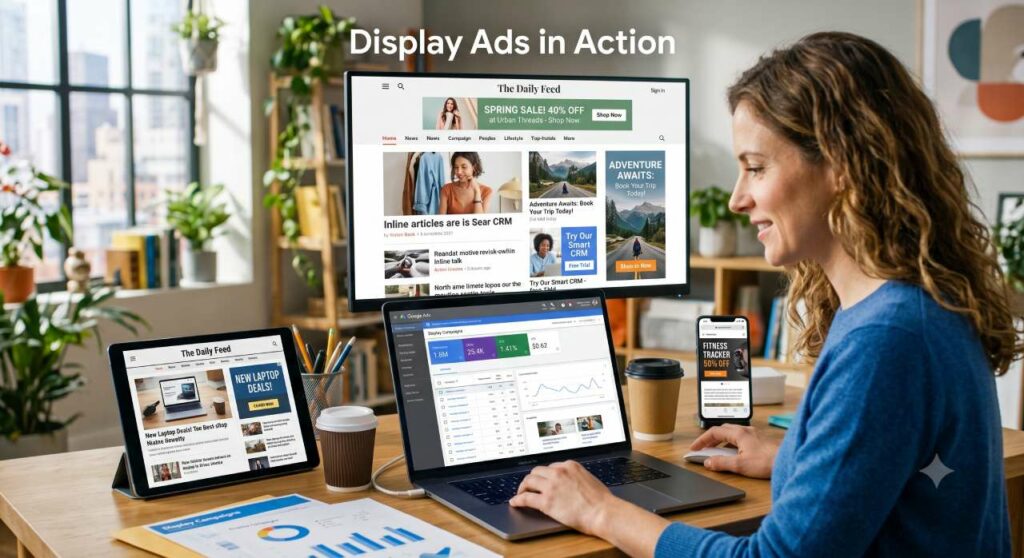
A Data-Driven System, Handhandled Personally
You don’t need a massive, rotating door of account executives to build a cross-channel digital footprint. In fact, that’s usually how ad spend gets wasted. Large agencies love to build complex, multi-layered campaigns and then pass the keys to a junior media buyer who forgets to monitor the placements.
Methodical, Data-Obsessed Execution
When you add Display and Remarketing to your marketing mix with me, you get the same methodical, data-obsessed execution I’ve brought to Search for the last 15 years.
End-to-End Ownership
I build the strategy, I write and structure the ad assets, I deploy the tags, and I optimize the placements myself.
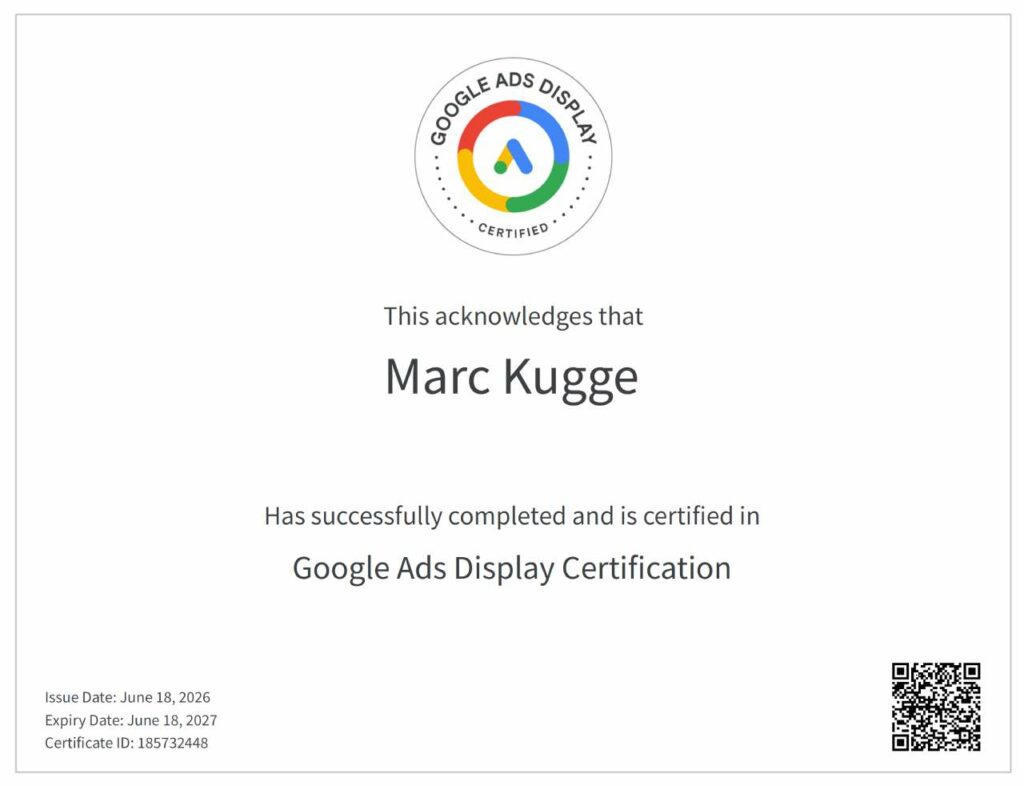
Backed by the Badge: Officially Google Ads Display Certified
When I say I don’t believe in “spray-and-pray” marketing, I mean it. I don’t just add new services to my portfolio on a whim or because they sound trendy. If my name is going on it, I ensure it is backed by rigorous standards, deep technical knowledge, and the latest platform frameworks.
Authenticated Mastery
For small and medium-sized business owners, this badge isn’t just a piece of digital paper. It represents an up-to-date, authenticated mastery of Google’s newest AI-driven display ecosystem, advanced audience targeting mechanics, and modern measurement protocols valid straight through to 2027.
Senior Independent Expertise
When you work with marckugge.com, you aren’t getting a junior account manager trying to figure out the network on your dime. You get a certified, senior independent expert who understands exactly how to translate visual impressions into measurable business growth.
Let’s Scale Your Growth
Ready to dominate search results and maximize your return on ad spend? Drop us a message and our team will get back to you shortly.

Send Us a Message
Fill out the form below and we’ll schedule a discovery call.
Conclusion: Mastering Google Display Ads for Long-Term Growth
Google Display Ads are no longer an optional afterthought or a random “spray-and-pray” tactic. When executed with surgical precision, custom intent audiences, and strict frequency capping, Display becomes an unbeatable engine for brand equity and remarketing success.
Launch Strategies
Ready to get started? Learn how to structure and deploy your campaigns effectively by checking out our guide on launching campaigns.
Traffic Expansion
Combine your visual touchpoints with search intent to scale visitor numbers. Explore our core strategies to boost traffic with Google Ads.
Profitable Returns
Protect your margins while scaling your outreach. Read our deep-dive on building SEA profitable campaigns.
Conversion-Ready Pages
Capturing intent is only half the battle. Ensure your visitors convert by pairing ads with dedicated SEA landing pages.
Frequently Asked Questions: Google Ads Display Advertising
Get clear insights on display strategy, remarketing mechanics, frequency capping, audience targeting, and brand equity.
1. Why expand from Search ads into Google Display Ads?
While search ads capture bottom-of-funnel demand, high-intent traffic is increasingly expensive. Display advertising primes the pump so users search for your brand name instead of generic industry terms, unlocking full-funnel growth.
2. Does cold Google Display advertising instantly drive direct sales?
No. Cold display campaigns do not instantly double direct sales. Realistically, cold display serves to build brand equity and subconscious familiarity, while high-ROI results come from deploying Display as a remarketing tool.
3. How does Search, Social, and Display marketing differ?
Search ads are high-intent “pull” marketing with high CPCs. Social ads are “push” marketing interrupting users inside a walled garden. GDN is an omnipresent layer reaching over 90% of global internet users naturally across web properties at a fraction of the cost.
4. Is banner blindness an issue with modern Display ads?
Old-school “spray-and-pray” animated GIFs are dead. Modern display is supercharged by Google’s machine learning, featuring Custom Intent audiences and Responsive Display Ads that match native browsing environments.
5. What are Custom Intent audiences in Display?
They allow us to serve visual ads to users only if they have recently searched for your competitors or specific industry terms on Google, leveraging real search intent for visual targeting.
6. What are Responsive Display Ads (RDAs)?
Instead of rigid single-size banners, we feed Google clean assets—images, logos, and headlines. Google’s AI automatically tests and pieces them together in real time to match the native look of whatever site the user browses.
7. How does Display build long-term brand equity?
It occupies mental real estate. By making your professional visual ads familiar across multiple sites, prospects type your brand name directly into Google later instead of triggering expensive search bidding wars.
8. What percentage of first-time website visitors leave without converting?
Statistically, about 97% of first-time visitors leave without buying or filling out a form due to distractions. Remarketing ensures that traffic and acquisition spend are not lost forever.
9. How does the Google Tag (tracking pixel) work?
The Google Tag acts as a digital concierge, anonymously dropping a secure digital identifier into a visitor’s browser. When they browse news sites or YouTube later, Google matches the identifier to display tailored banner ads.
10. How do you prevent remarketing from feeling “creepy” or like stalker behavior?
We apply surgical precision by hard-coding frequency caps so users never see your ad more than a few times a day, ensuring your brand remains memorable rather than annoying.
11. What is Custom Audience Segmentation in remarketing?
It ensures ads match user behavior. Someone who spent 10 minutes on a checkout page sees a specific testimonial or incentive, whereas someone who bounced off the homepage sees a different message.
12. What is Dynamic Remarketing for e-commerce and software?
It connects product feeds directly to ads. If a user viewed a specific item or software tier on your site, they are dynamically served an ad featuring that exact product.
13. Who manages the campaigns when working with marckugge.com?
You work directly with a senior independent expert. Rather than passing your account to junior interns or account executives, Marc builds the strategy, writes the assets, deploys tags, and optimizes placements personally.
14. What official certification backs these display services?
Alongside 15 years of hands-on experience, services are backed by official Google Ads Display Certification (Certificate ID: 185732448), validating mastery of AI-driven display ecosystems valid through 2027.
15. How can I get started with display and remarketing?
You can reach out directly through the contact form at marckugge.com or get in touch with the office in Barcelona to review your data and build a full-funnel growth setup.