
Building a Multilingual Affiliate Travel Blog Network From Scratch
Millions of German tourists travel to cities like Barcelona, Amsterdam, and Venice every year looking to buy museum and tour tickets. By addressing the gap in thin or outdated content, a self-built network of travel blogs was designed to capture search intent and drive continuous affiliate commissions.
🚀 A completely solo freelance initiative run from domain registration to recurring affiliate payouts—proving that strategic niche content creation delivers long-term passive revenue. ✨
The Core Strategy
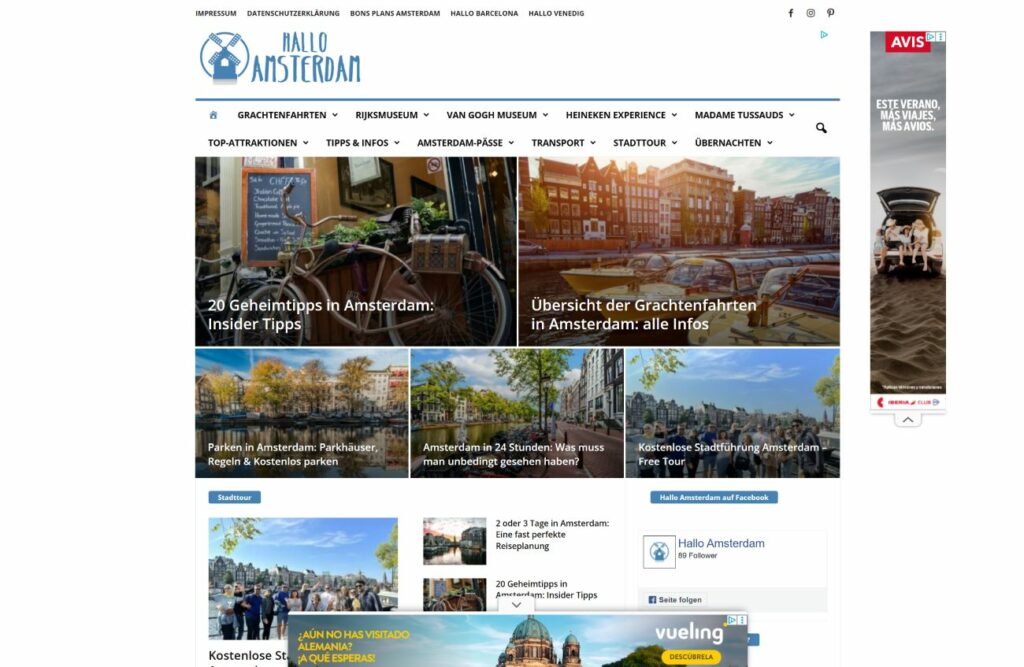
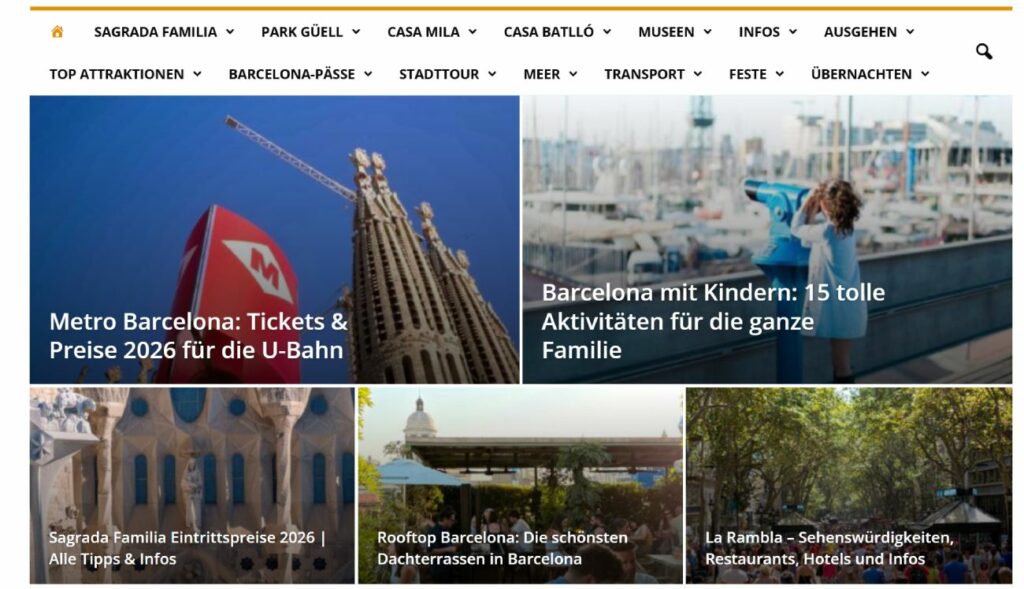
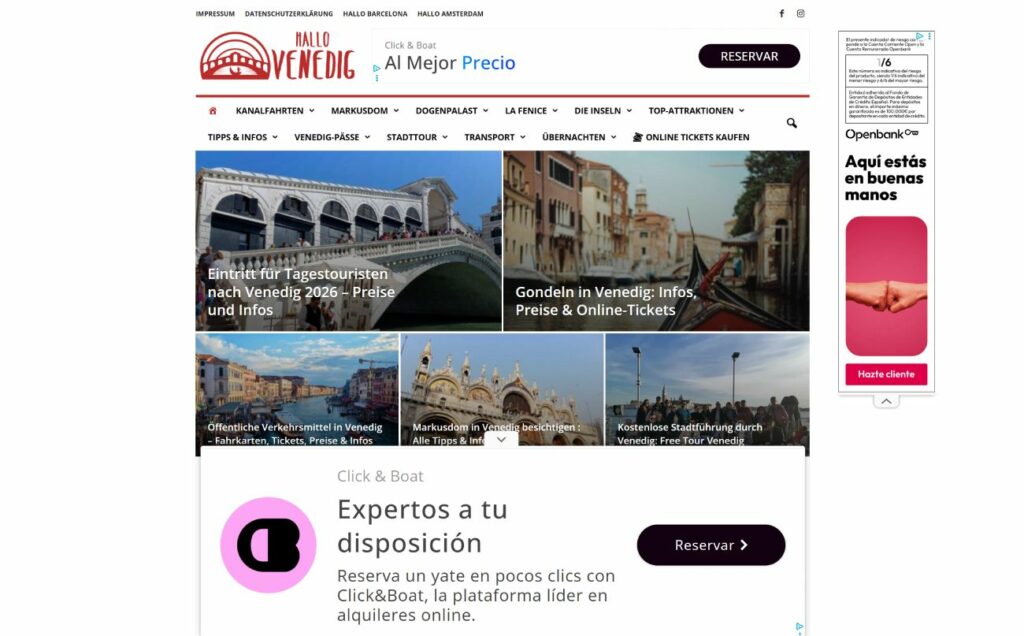
The network started with three flagship blogs, one per city:
Built From Scratch
Each site was built entirely from scratch – content, structure, and technical setup – around a simple but deliberate content architecture: topical silos. Rather than publishing scattered articles, every post was written to sit inside a clear content cluster (e.g. “Sagrada Família tickets,” “best times to visit,” “day trips from the city”) and to interlink heavily within that cluster.
Dual-Action Impact
This did two things at once: signaled topical authority to search engines for each subject area, and kept readers moving deeper into the site instead of bouncing after one article – which mattered directly for affiliate conversion, since the more a reader trusted the site, the more likely they were to click through to book.
Comprehensive Content
Articles were written at a consistent length of roughly 2,000 words – long enough to genuinely answer a traveler’s questions (opening hours, ticket types, skip-the-line options, nearby attractions, practical tips). Backlinks were never bought; the strategy relied purely on organic backlinking through genuinely useful, citable content.
The Business Model
The monetization model was straightforward and tightly aligned with search intent: a German tourist searches “Sagrada Família Tickets kaufen,” lands on a helpful, detailed article, and clicks through an affiliate link to buy their ticket. The blog earns a commission on the sale.
Direct Monetization
Aligning helpful content directly with transactional search terms to capture high-intent travelers right before they purchase museum and tour tickets.
Strategic Partnerships
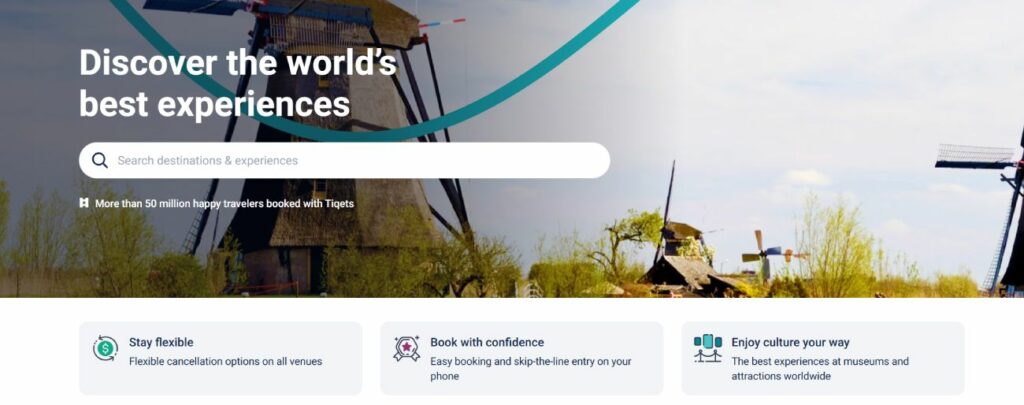
Building relationships with several major ticketing and tour affiliate networks (Tiqets, GetYourGuide, and Viator) to ensure broad coverage.
Independence & Choice
Working with multiple affiliate partners rather than a single provider gave flexibility to recommend whichever option genuinely fit a given attraction or offered the best commission structure – and it meant the business wasn’t dependent on any one partner’s terms.
Additional Revenue
Affiliate commissions were the primary business model, but they weren’t the only income stream.
Google AdSense Integration
The network’s sites were also monetized with Google AdSense, turning display advertising into a genuinely solid secondary source of income.
Passive Monetization
Thanks to the consistent traffic built up over the years across all the blogs, display ads ran quietly alongside the affiliate revenue on every single page view.
Guaranteed Yield
Monetization occurred regardless of whether that particular visitor ever clicked through to book a ticket, maximizing the value of every single visit.
Expanding Into New Markets
Once the German-language blogs were proven and generating consistent affiliate revenue, the natural next step was geographic expansion. The French market for travel content is notably more competitive than the German one – but it also represented real, untapped revenue potential once the underlying content and conversion model had already been validated in German.
French Market Adaptation
Rather than starting from zero in French, the working blogs were translated and adapted into localized properties like monbarcelone.com and bons-plans-amsterdam.com.
English Content Extension
Select content was also translated into English for two of the cities (fascination-venice.com and fascination-amsterdam.com), extending reach to a broader pool of international travelers.
Prove Once, Translate Everywhere
This approach meant every new market launch started with content that had already demonstrated it could rank and convert – dramatically reducing expansion risk.
Scaling With AI: Network Directory
Alongside the three core, hand-built flagship blogs, a second layer of the network was developed with the help of AI tools – smaller, more narrowly focused sites targeting specific attractions, neighborhoods, or ticket categories rather than an entire city.
-
01
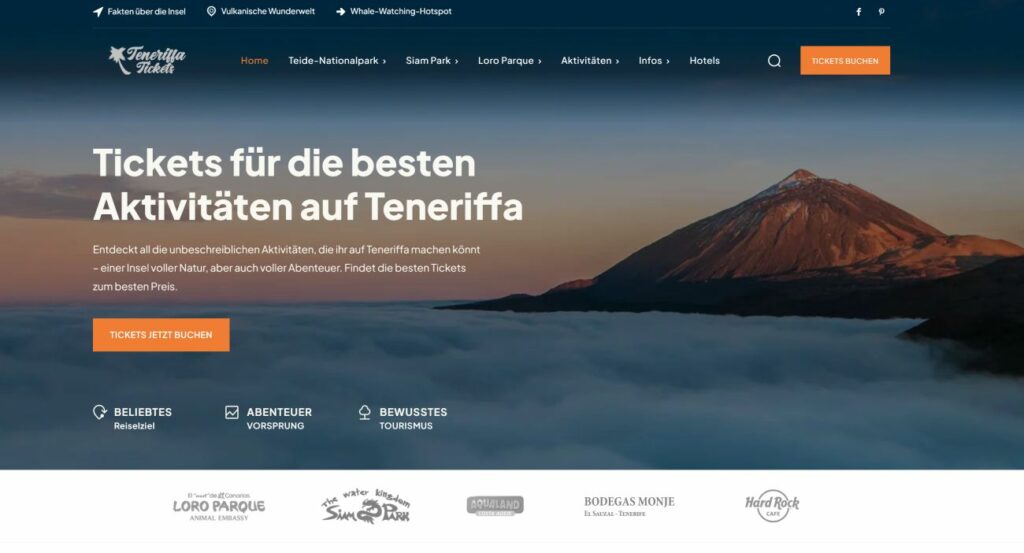
teneriffatickets.de ↗ German Niche
A dedicated site for German tourists visiting Tenerife, earning affiliate revenue on tickets to Loro Parque and Siam Park.
-
02
st-marks-tickets.com ↗ English Guide
An English-language travel guide focused on visiting St Mark’s Basilica in Venice, built out to around 20 articles.
-
03
flamencobarcelona.de ↗ German Market
A German-language site for tourists in Barcelona looking to experience the city’s flamenco shows.
-
04
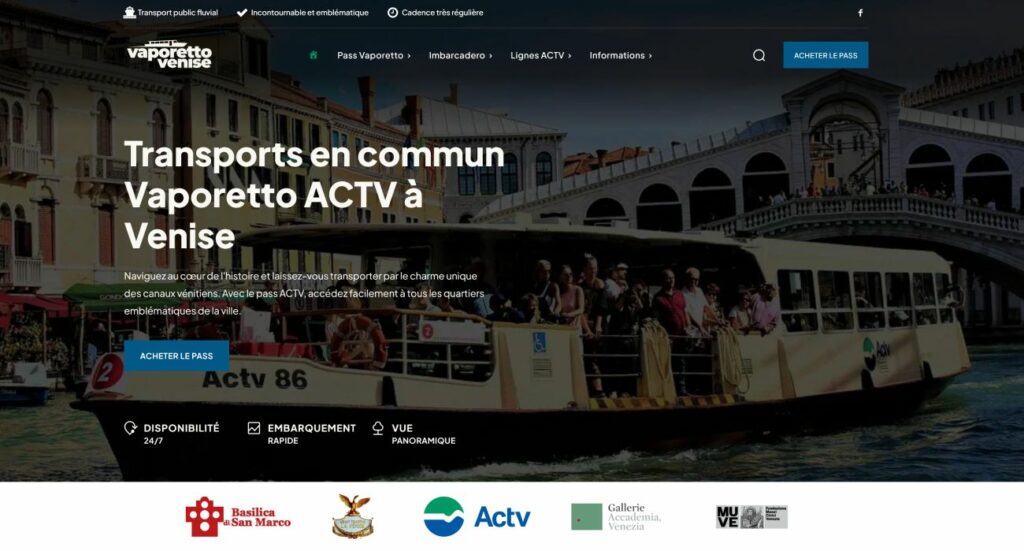
vaporettovenise.fr ↗ French Niche
A French-language niche site about Venice’s vaporetto network, the main way visitors get around the city.
-
05
aquariumporto.fr ↗ French Niche
A French-language site covering the aquarium in Porto.
-
06
metrobarcelone.fr ↗ French Niche
A French-language guide to Barcelona’s public transit system (Metro, trains, Rodalies, and Ferrocarrils), which can be confusing for first-time visitors.
-
07
zooamsterdam.fr ↗ French Niche
A French-language site about the Amsterdam zoo.
-
08
moulins-amsterdam.fr ↗ French Niche
A French-language niche site about the famous Zaanse Schans windmills in the Netherlands.
-
09
croisieres-amsterdam.fr ↗ French Niche
A French-language site about canal cruises in Amsterdam.
-
10
madridanimalpark.com ↗ Multilingual
A multilingual site covering the Madrid zoo.
-
11
burglissabon.de ↗ German Niche
A German-language niche site about São Jorge Castle in Lisbon.
-
12
klosterlissabon.de ↗ Niche Guide
A niche site about the Jerónimos Monastery in Lisbon.
-
13
vaporettovenice.com ↗ English Niche
The English-language counterpart to vaporettovenice.fr, covering Venice’s vaporetto network.
-
14
parkingamsterdam.de ↗ German Niche
A German-language niche site about parking in Amsterdam.
Off-Site Distribution
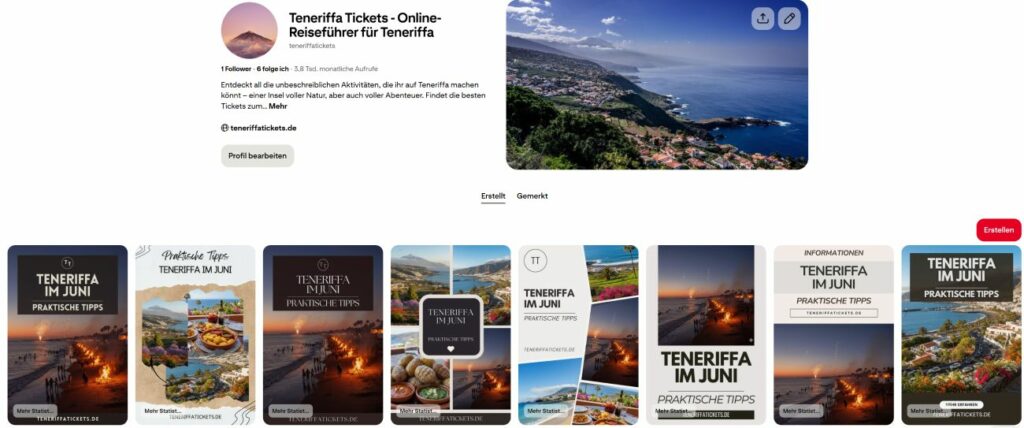
Search wasn’t the only distribution channel. Several Pinterest accounts were built to drive supplementary traffic and links back to the blogs, functioning as an evergreen visual discovery layer on top of the SEO strategy.
Recent Account Analytics
Over a 30-day window, the account generated roughly 3.84K impressions, 237 interactions, 68 outbound clicks, and 22 saves.
Audience Engagement
Reaching a total audience of 2.2K and an engaged audience of 111—figures that moved down double digits versus the prior period.
Supporting Channel
Organic social distribution needs to be treated as a supporting channel rather than the primary growth engine, with SEO doing the heavy lifting for stable, compounding traffic.
A Closer Look: vaporettovenise.fr
Complete Practical Guide
vaporettovenise.fr is a good example of how the smaller, niche sites in the network were built to actually work rather than just exist. The content isn’t a thin, throwaway page — it’s a real, complete guide to the vaporetto, genuinely useful for anyone trying to figure out Venice’s only practical way of getting around the city.
Testing Ground for Google Ads
That quality paid off in two ways at once. Organically, the site ranks well in Google and brings in steady affiliate revenue on its own. On top of that, it was also used as a testing ground for exact-match keyword Google Ads campaigns — paid search targeting the precise terms visitors were searching for around Venice’s vaporetto tickets.
ROAS of 2x
That paid layer achieved a ROAS of 2x, meaning every euro spent on ads returned two euros in revenue, on top of what the site was already earning organically.
SEO Best Practices That Made It Work
None of this scales without disciplined, repeatable on-page SEO fundamentals applied consistently across every single site in the network. The practices baked into every blog from day one included:
Meta Descriptions
Written for every article to improve click-through rate from search results, not just as a formality.
Original Photography
Rather than stock images – both for uniqueness (avoiding duplicate-content image penalties) and for building reader trust that the content came from someone who actually knows the destination.
Optimized Meta Titles
Targeting the specific search intent of each article, rather than generic city-wide titles repeated across pages.
Clean, Short URLs
Clearly reflected the page topic instead of long, parameter-heavy slugs.
Internal Interlinking
Topical silo architecture with deliberate internal interlinking, so authority built on one article flowed to related articles in the same cluster.
Organic Backlink Acquisition
Through genuinely useful content, avoiding link schemes that create long-term algorithmic risk.
Consistent Content Depth
Roughly 2,000 words per article to fully satisfy search intent rather than publishing thin pages purely to increase site count.
The Result
What started as three German-language blogs built solo, targeting a specific, underserved audience – German tourists needing tickets for Barcelona, Amsterdam, and Venice – grew into a multilingual network spanning German, French, and English, supported by over a dozen additional AI-assisted niche sites and a Pinterest distribution layer, all monetized through affiliate partnerships with Tiqets, GetYourGuide, and Viator.
From 3 Blogs to a Network
Expanded seamlessly from German-language roots into French and English markets, supported by a dozen AI-assisted niche properties and social distribution.
Affiliate Ecosystem
Monetized entirely through industry-leading partnerships with Tiqets, GetYourGuide, and Viator, capturing high-intent booking traffic.
Compounding SEO
The throughline across every site, language, and silo was the same: identify a real, specific piece of traveler intent, build genuinely useful content around it, and let disciplined SEO fundamentals do the compounding work.
Frequently Asked Questions
01 How did you find profitable keywords for German tourists?
The core idea was to write for the exact questions a German tourist actually types into Google before or during a trip – ticket-buying questions like “Sagrada Família Tickets kaufen” or “Anne Frank Haus Tickets” – rather than broad, generic city guides. Each article was built around one specific piece of intent, then grouped with related articles into a silo so the whole cluster reinforced the same topic.
02 What made the topical silo structure work for SEO?
Grouping content into tightly interlinked clusters – instead of publishing scattered, standalone posts – signaled clear topical authority to search engines and kept readers moving deeper into the site rather than leaving after one page. That combination of relevance and internal linking was central to both rankings and affiliate conversions.
03 Why did you target the German market before French, even though French demand is larger?
The French travel content market was noticeably more competitive, which meant a higher cost and longer timeline to rank. The German market had a clearer gap between search demand and the quality of existing content, making it the faster path to proving the model before expanding into tougher markets.
04 How do you make money from a travel blog without selling anything yourself?
Every blog is monetized through affiliate commissions: when a reader clicks through to buy tickets or book a tour via GetYourGuide, Tiqets, or Viator, the blog earns a percentage of that sale. The blog’s job is purely to get the right person to the right article and guide them to book with confidence.
05 Why work with Tiqets, GetYourGuide, and Viator instead of just one affiliate partner?
Using multiple affiliate partners meant being able to recommend whichever option genuinely fit a given attraction, tour, or ticket type – and avoiding dependence on any single provider’s commission rates, availability, or policy changes.
06 How did you get backlinks without paying for them?
Backlinks were earned organically by publishing genuinely useful, detailed content worth referencing – not through link buying or outreach schemes. This kept the sites’ link profiles clean and resilient against the algorithm updates that regularly penalize manipulative backlink tactics.
07 What’s the difference between the flagship blogs and the AI-assisted niche sites?
The three flagship blogs (hallo-barcelona.com, hallo-amsterdam.com, hallo-venedig.com) are broad, hand-built city guides covering the full range of tourist intent for that city. The AI-assisted sites are much narrower, each targeting one specific attraction, transport type, or activity – capturing long-tail search demand that a city-wide blog can’t efficiently cover on its own.
08 Was it worth translating the blogs into French and English instead of writing new content?
Yes – translating content that had already proven it could rank and convert in German removed most of the risk of a cold start. Rather than testing a new content strategy from scratch in each language, the French and English versions launched with a format and structure already validated by real search and conversion data.
09 How much traffic did Pinterest actually drive compared to organic search?
Pinterest was always a supporting channel, not the primary one – organic search does the heavy lifting for stable, compounding traffic. Pinterest added a visual discovery layer on top of that; the Tenerife account, for example, averaged around 70 clicks per month, though performance on the platform can swing month to month more than organic search does.
10 How long did it take before the blogs started generating meaningful affiliate revenue?
That varied by site and market, since ranking timelines depend on competition level and how much content had already been published in that niche. As a general pattern, the German-market flagship blogs reached meaningful traffic and affiliate activity before the sites were expanded into French and English.