
GEO Audit: How Visible Is
Your Brand in AI Answers?
A GEO audit shows whether ChatGPT, Perplexity, Google AI Overviews and Microsoft Copilot mention your brand when customers ask about your products or services, and what stops them from doing so.
What you get: a clear report with your current AI visibility, the technical and content issues behind it, and a prioritised action plan. Available for websites in German, French, English and Spanish.
What Is a GEO Audit?
A GEO audit checks how AI search tools see your website and your brand: whether they find your pages, understand them, and recommend you in their answers.
More and more customers ask ChatGPT, Perplexity or Google’s AI Overviews instead of clicking through ten search results. These tools pick a few sources and brands and name them in their answer. If your brand is not among them, the customer may never reach your website.
A classic SEO audit checks rankings, technical health and backlinks. A GEO audit adds the questions that decide AI visibility: Can AI crawlers access your site? Does your content give clear, quotable answers? Do other websites mention your brand? Is your site indexed in Bing, which feeds Microsoft Copilot and other assistants?
The audit builds on SEO. AI tools often draw on pages that already perform well in search, so the technical and content foundations still matter. For the strategy behind it, read my guides on improving GEO and on ranking in ChatGPT.

Why AI Visibility Matters for Your Business
AI tools answer the question and name a handful of brands. Being one of them is the new first page.
In a classic search result, a customer sees ten links and compares several of them. In an AI answer, the customer reads one summary that mentions two, three or four brands, often with a short reason for each. The brands that are not named are rarely considered. For many businesses, that shifts the competition from “ranking somewhere on page one” to “being part of the answer”.
The customers who arrive from AI tools are often further along in their decision. They have already asked follow-up questions, compared options and read a recommendation. When they click through to your website or search for your brand name, they come with a clear intent.
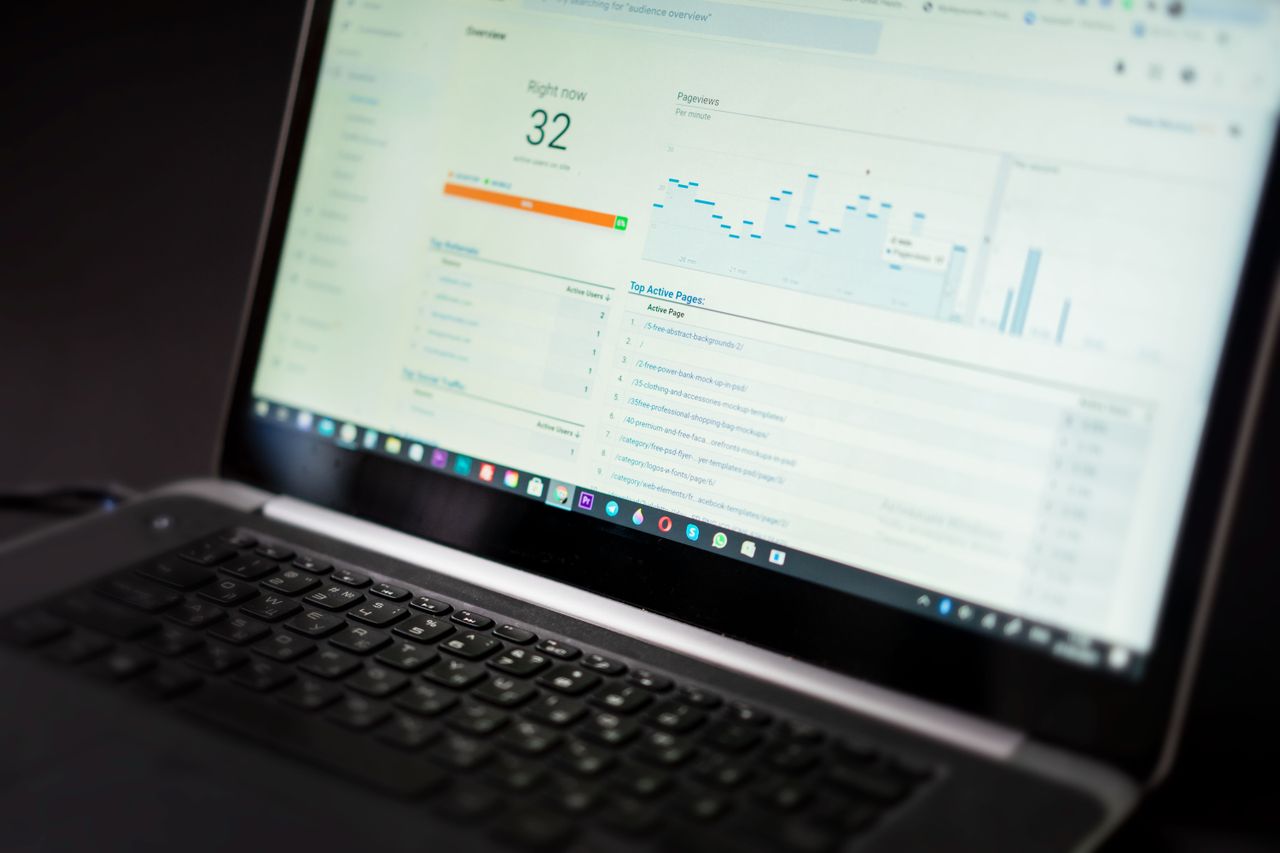
AI visibility is also measurable. In Google Analytics or a similar tool, visits from AI assistants show up as referrals from domains such as chatgpt.com, perplexity.ai and copilot.microsoft.com. Branded searches in Google Search Console can grow when AI tools mention you, because people look up the name they just read. The audit sets a baseline for both, so you can see later whether the changes worked.
Finally, AI tools describe your business in their own words. If the information they find is outdated, incomplete or inconsistent, they may describe you incorrectly: wrong services, old prices, the wrong location. Part of the audit is checking what AI tools say about you, not only whether they mention you.
What the GEO Audit Checks
Six areas, each with a clear finding and a recommended fix.
AI Visibility Test
I ask ChatGPT, Perplexity, Google AI Overviews and Copilot the questions your customers ask, and record whether your brand, your pages or your competitors appear.
Crawl Access for AI
I check your robots.txt and server settings for AI crawlers such as GPTBot, OAI-SearchBot, PerplexityBot and Google-Extended, and whether important pages are blocked by accident.
Bing & Indexing
I check whether your site is verified in Bing Webmaster Tools and Google Search Console, and whether your key pages are indexed in both.
Content Answer Quality
Do your pages answer the main question in the first paragraph? Are headings phrased as questions? Are facts, prices and steps easy to quote?
Structured Data
I review your schema markup (Organization, Product, FAQPage, LocalBusiness, Article) and check that it is valid and not stripped by your CMS or plugins.
Brand & Trust Signals
I look at how your brand appears beyond your own site: mentions, reviews, directory listings, author information and consistent company details.
For multilingual websites
| Check | What I look for |
|---|---|
| AI answers per language | Whether your brand appears when customers ask in German, French, English or Spanish, not only in one language. |
| Translation quality | Untranslated or wrongly translated text that makes your pages harder for AI tools to understand and quote. |
| Hreflang & structure | Correct hreflang setup, language URLs and sitemaps for every version. |
The Six Audit Areas in Detail
What I check in each area, the problems I see most often, and how they are usually fixed.
1. AI visibility test
I write a set of questions that your customers actually ask, in each of your languages: questions about your category (“best SEO agency in Barcelona”), about problems you solve (“how do I get my shop into Google AI Overviews”), comparisons with competitors, and questions about your brand by name. I run the same questions in ChatGPT, Perplexity, Google AI Overviews and Copilot and record which brands and sources appear.
The result is a simple overview: where you appear, where a competitor appears instead, and which websites the AI tools cite as sources. Those cited sources are often the most useful finding, because they show which directories, review sites, comparison articles or media the AI tools trust in your market.
2. Crawl access for AI
AI tools can only use what their crawlers can read. I check your robots.txt file for rules that block AI crawlers such as GPTBot, OAI-SearchBot, ChatGPT-User, PerplexityBot, Google-Extended and Bingbot, and I check whether a firewall, CDN or security plugin blocks them at server level.
A common finding is a security setting or a copied robots.txt that blocks AI crawlers without anyone noticing. Another is content that only appears after JavaScript runs, which some crawlers do not see. The fix is usually small: a few lines in robots.txt, an adjusted firewall rule, or making important text available in the page’s HTML.
3. Bing and indexing
Microsoft Copilot works with Bing’s index, and other assistants also draw on Bing results. Many websites are set up in Google Search Console but have never been added to Bing Webmaster Tools. I check whether your site is verified in both, whether your sitemap is submitted, and whether your most important pages are indexed.
I also look at the usual indexing problems that affect both search and AI: canonical tags pointing to the wrong page, important pages marked noindex, duplicate language versions and outdated sitemaps.
4. Content answer quality
AI tools prefer content they can quote: a clear answer to a clear question, with specific facts. I review your most important pages for how they are written, not just what they cover. Does the first paragraph answer the main question? Are headings phrased the way customers ask? Are prices, steps, locations and conditions stated plainly, or hidden in long marketing text?
Typical fixes are rewriting introductions so they answer first, adding a short FAQ section to service pages, turning vague claims into concrete facts, and creating pages for questions your customers ask but your site does not answer yet. This is also where content copywriting and a clear content structure support GEO.
5. Structured data
Structured data (schema markup) tells machines what a page is about: your organisation, a product with its price, a local business with its address and opening hours, an article with its author, or a list of questions and answers. I check which types your site uses, whether they are valid, and whether they match what is visible on the page.
A frequent problem is markup that a theme, page builder or editor role removes without warning, so the code you added never reaches the live page. Another is markup that contradicts the page, such as a price in the schema that differs from the price shown. Both are easy to fix once they are found.
6. Brand and trust signals
AI tools do not rely on your website alone. They also look at what other websites say about you. I check how your brand appears in reviews, directories, industry listings, social profiles and articles, and whether your company name, address, services and contact details are consistent everywhere.
On your own site, I look at the signals that show who is behind the business: an about page, author information on articles, clear contact details, references and case studies. These are the same signals Google calls experience, expertise, authority and trust, and they help AI tools decide whether to recommend you.
GEO audit vs SEO audit
| SEO audit | GEO audit |
|---|---|
| Rankings in Google search results | Mentions and citations in AI answers |
| Googlebot crawling and indexing | AI crawler access and indexing in both Google and Bing |
| Keywords and search volume | The questions customers ask AI tools, per language |
| Backlinks and domain authority | Brand mentions, reviews and the sources AI tools cite |
| Content that ranks | Content that gives clear, quotable answers |
How the GEO Audit Works
Four steps, from the first call to a plan you can act on.

Short discovery call
We talk about your business, your markets and languages, your main competitors and the questions your customers ask before they buy.
AI visibility test
I build a set of real customer questions and test them in the main AI tools, so you see where you appear today and where your competitors take your place.
Technical & content review
I check crawl access, indexing, structured data, content structure and brand signals across your most important pages.
Report & action plan
You receive the report and we go through it together. Every issue has a priority, so you know what to fix first.
What You Get
A report you can use yourself, hand to your developer or implement with me.

Visibility snapshot
Which AI tools mention you, for which questions, and which competitors appear instead. This becomes your baseline to measure progress.
Issue list
Technical, content and brand issues, each explained in plain language with the page it affects and the fix it needs.
Prioritised roadmap
Quick wins first, then the larger tasks such as new content or structured data, with a realistic order and timeline.
The report comes as a clear PDF presentation, written in plain language, in English, German, French or Spanish. Each finding shows a screenshot or example, the page it affects, why it matters for AI visibility and what needs to change. Technical points are written so you can forward them directly to your developer or website admin.
After you receive the report, we go through it together in a video call. You can ask questions, and we agree which steps you take yourself and which ones I take care of.
Is a GEO Audit Right for You?
Service businesses
Agencies, consultants, clinics and local businesses whose customers ask AI tools for recommendations before they call.
E-commerce
Shops that want their products to appear when customers ask AI assistants which product to buy.
Multilingual websites
Companies selling in several countries that need to be visible in AI answers in every language, not just one.
What Happens After the Audit
The audit is the starting point. The value comes from acting on it and measuring the result.
Quick wins
Technical fixes such as crawler access, Bing verification, sitemaps and broken structured data can often be done in days. They remove obstacles that stop AI tools from reading your site.
Content work
Rewriting key pages to answer first, adding FAQs and creating pages for missing questions takes longer. I prioritise the pages closest to a sale.
Re-test
After two to three months, I run the same questions again in the same AI tools and compare the results with your baseline, so you see what changed.
AI tools change how they choose sources, and your competitors keep publishing. GEO is therefore not a one-time fix. Many clients start with the audit, implement the quick wins, and then continue with regular content and a re-test every few months. Others use the audit as a brief for their own team or developer. Both work, as long as the recommendations are implemented.
GEO Problems I Find Most Often
AI crawlers blocked by accident
A security plugin, firewall or copied robots.txt that keeps AI crawlers out, while the owner thinks the site is open.
No Bing Webmaster Tools
The site is in Google Search Console but was never added to Bing, which limits visibility in Copilot and other assistants.
Answers buried in marketing text
Service pages that talk about quality and passion but never state plainly what the service is, who it is for and what it costs.
Weak multilingual versions
Automatic translations with untranslated or wrong text, so the site is visible in one language and nearly invisible in the others.
An Example From a Recent Project
A multilingual e-commerce website, available in six languages, without the client’s name.
The site sold a specialist document online and published blog articles in one language, translated automatically into five others. On the surface, everything looked fine: the pages loaded, the products were listed and the blog was active.
The audit found several problems that limited its visibility in AI answers. The FAQ schema added to the articles was removed by the website’s editor settings and never reached the live pages. The translated versions still contained untranslated sentences, and some translations changed the meaning completely. The blog overview in the other languages showed outdated content because of a caching issue. And the existing articles were short, answering one question each instead of the full situation a customer was in.
The action plan started with the technical fixes for the admin: the caching, the translation settings and the schema. In parallel, new long-form articles were written with direct answers, a section per country and ten FAQs each, so every language version could answer the questions customers ask in their own market.
How to Prepare for Your GEO Audit
The more I know about your business, the more precise the visibility test.
Your markets and languages
Which countries you sell in, in which languages, and which of them matter most for your revenue.
Your main competitors
Three to five competitors you lose customers to, so I can see who AI tools recommend instead of you.
Your customers’ questions
The questions your sales team or support hears most often. They are usually the same questions customers ask AI tools.
Read access to your data
Google Search Console, Google Analytics and, if you have it, Bing Webmaster Tools. Read-only access is enough.
Frequently Asked Questions
What is the difference between an SEO audit and a GEO audit?
An SEO audit focuses on rankings in search results. A GEO audit checks whether AI tools such as ChatGPT, Perplexity and Google AI Overviews find, understand and recommend your brand. It covers AI crawler access, Bing indexing, answer-friendly content and brand mentions on other sites.
Which AI tools does the audit cover?
ChatGPT, Perplexity, Google AI Overviews and Microsoft Copilot. If your customers use other tools, we can add them.
How long does a GEO audit take?
It depends on the size of your website and the number of languages. You get a delivery date before we start.
Do I need access to my website for the audit?
Not for the first part. For the indexing check, read access to Google Search Console and, if you have it, Bing Webmaster Tools gives more accurate results.
Can you guarantee that my brand will appear in ChatGPT?
No. Nobody can guarantee that, because AI tools choose their sources themselves and change how they work. The audit shows what limits your visibility today and what improves your chances.
Why does Bing matter for GEO?
Microsoft Copilot uses Bing’s index, and other AI assistants also draw on Bing results. A site that is not indexed in Bing is harder for these tools to find.
Can you also implement the recommendations?
Yes. You can implement the action plan yourself or with your developer, or I can take care of the content, structured data and technical fixes for you.
Do you audit websites in other languages?
Yes. I work in German, French, English and Spanish, and check AI visibility separately for each language version of your website.
How do I know if visitors come from ChatGPT or other AI tools?
In Google Analytics or a similar tool, check your referral traffic. Visits from AI assistants appear from domains such as chatgpt.com, perplexity.ai and copilot.microsoft.com. The audit includes this check if you give me access.
How often should a GEO audit be repeated?
A full audit once a year is usually enough. A shorter re-test of your AI visibility every two to three months shows whether the changes are working and how your competitors move.